
Thailand on a budget: all the top destinations, islands and a 3-week route
Thailand is the easiest country in Asia to travel on a budget by yourself: cheap street food, affordable guesthouses, buses and night trains, and the big temples and beaches cost nothing at all.
It has everything in one place: loud Bangkok with its palaces and canals, northern towns with temples and jungle, the ancient capitals of Ayutthaya and Sukhothai, the Andaman Sea with the Phi Phi and Lanta islands, and the Gulf of Thailand with Samui and Tao.
We've gathered every main destination in the country with price benchmarks, money-saving tricks and a ready-made three-week route that runs north to south, so you never have to backtrack.
Thailand is the easiest country in Asia to travel on a budget by yourself: cheap street food, affordable guesthouses, buses and night trains, and the big temples and beaches cost nothing at all.
What to see: the main destinations
Bangkok
The capital and the country's main hub: the Grand Palace and Wat Pho with its reclining Buddha, Wat Arun at sunrise over the Chao Phraya, the Yaowarat Chinatown food streets, Chatuchak market with its 15,000 stalls at weekends, and dozens of boat routes along the river.
Tickets: accommodation from 300–600 baht, street food 50–80 baht · 2–3 days
Money-saving tip: Chao Phraya boats and the Bang Waek river transport are cheaper than any taxi and never sit in traffic. Eat where locals sit, not on Khao San — the same dishes cost half as much.
Ayutthaya
The ancient capital of Siam, with 14th–18th century temple ruins on an island: Wat Chaiwatthanaram with a stone Buddha under a tree, Wat Mahathat with a Buddha head in the roots, and Wat Phra Si Sanphet with its three stupas. The ruins stand right in the middle of town.
Tickets: train from Bangkok from 20–40 baht, temple entry by ticket · 1 day (better with an overnight stay)
Money-saving tip: Take the third-class train — dirt cheap and full of character. Rent a bicycle when you get there (around 50–60 baht a day) and buy a combined ticket for several temples.
Chiang Mai
The northern capital inside a ring of old city walls: Wat Chedi Luang and Wat Phra Singh, Wat Doi Suthep on the mountain above town, night markets, coffee shops and the Doi Inthanon mountains nearby. This is the calmest rhythm in the country.
Tickets: accommodation from 300–700 baht, market food from 40 baht · 3–4 days
Money-saving tip: The Sunday Walking Street market has the best food in town for pennies. Ride up to Doi Suthep in a songthaew, not a taxi; scooter rental is 200–300 baht a day, but check the helmet and brakes.
Chiang Rai and the Golden Triangle
The White Temple, Wat Rong Khun — an artist's fantasy of white glass and concrete; the Blue Temple, Wat Rong Suea Ten, with its blue murals; the Golden Triangle where Thailand, Laos and Myanmar meet; and a boat trip on the Mekong.
Tickets: bus from Chiang Mai 150–250 baht, temple entry by ticket · 2 days
Money-saving tip: See the White Temple at 8:00–9:00 — the crowds arrive by 10:00. Stay in a hostel by the bus station and take a shared minivan to the Golden Triangle; it's cheaper than a tour.
Pai
A small mountain town near Myanmar where people go for the feeling that time stopped: hot springs, Pai Canyon, Shan and Karen villages, waterfalls, viewpoints and an evening night market on the main street.
Tickets: minivan from Chiang Mai 150–250 baht, accommodation from 300 baht · 3 days
Money-saving tip: The road from Chiang Mai has 762 curves — take motion-sickness pills if you're prone to it. Rent a bike locally (150–250 baht) and skip the group tours: you can reach almost everything yourself.
Sukhothai
Thailand's first capital and the birthplace of the Thai script: a historical park with Buddha statues, stupas and canals, Wat Mahathat and Wat Si Chum, all spread over an area that's easy to cover by bicycle.
Tickets: bus from Chiang Mai 200–300 baht, entry by ticket · 1–2 days
Money-saving tip: Walk or cycle (rental is around 50 baht), don't take a horse cart. Go early in the morning for the light, the quiet and empty photos.
Phuket
The biggest island in the country: Patong, Kata, Karon and Kamala beaches, a Sino-Portuguese old town, Promthep Cape at sunset, the Big Buddha on the hill and boats out to the islands of Phang Nga Bay.
Tickets: accommodation from 500–900 baht, market food from 60 baht · 4–6 days
Money-saving tip: Kata and Karon are cheaper than Patong, and food is cheapest at the markets and in Thai cafés two blocks back from the seafront. Rent a bike to get around the island: public transport here is weak.
Phi Phi and the Andaman islands
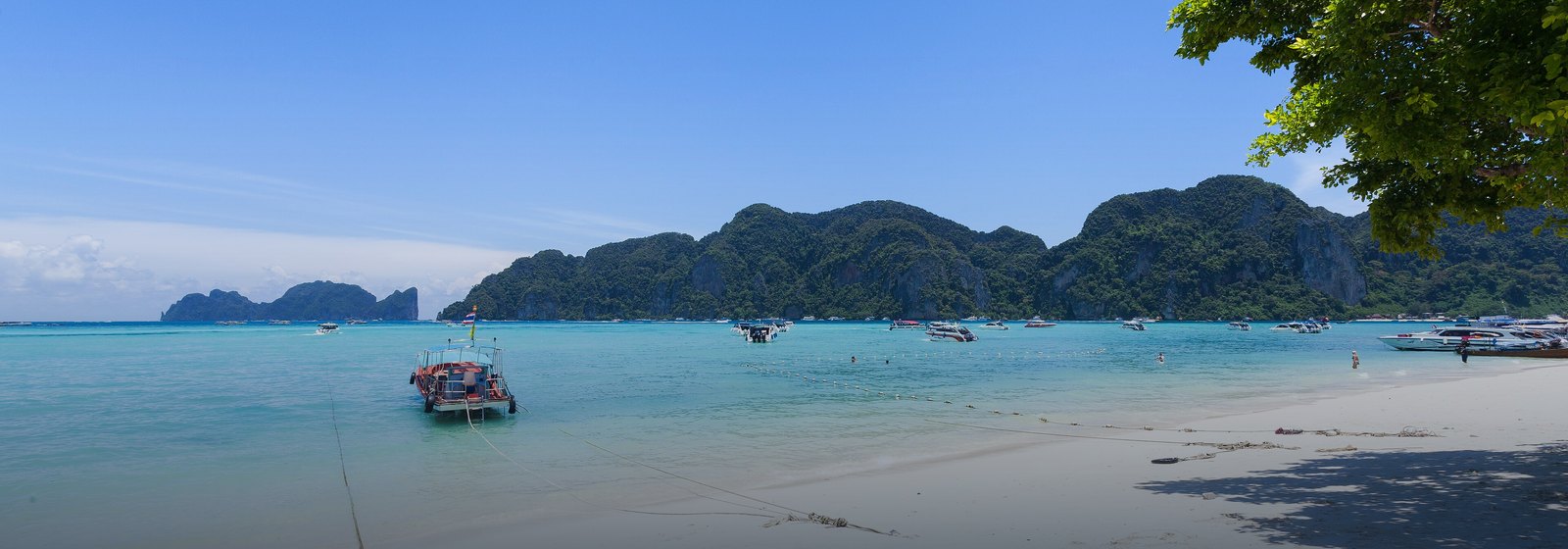
Islands with glass-clear water: Maya Bay, Pileh Lagoon, karst cliffs, snorkelling with fish and nurse sharks. Koh Phi Phi Don is the main island with cafés and dive clubs, Koh Phi Phi Leh the wild side with rock climbing.
Tickets: ferry 500–900 baht, accommodation from 700 baht · 2–3 days
Money-saving tip: Day trips from Phuket cost more and show you less than actually staying: take the ferry and sleep on Phi Phi. Book boat tours in the morning — the water is calmer and there are fewer boats.
Krabi: Ao Nang and Railay
The province with the country's best beaches: Railay with its sheer cliffs is reachable only by water, Ao Nang has all the infrastructure, plus Chao Fah, Huay To waterfall, the Emerald Pool and hot springs in the jungle.
Tickets: bus or flight from Bangkok, accommodation from 500 baht · 3–4 days
Money-saving tip: The Ao Nang–Railay longtail taxi costs 100–150 baht and leaves once the boat fills up: don't pay for a whole boat. Four-island tours are cheaper booked locally rather than online.
Koh Lanta
A quiet island with long empty beaches on the west side, mangrove forests, the fishing village of Saladan and Koh Lanta National Park with its lighthouse and the Sea Gypsy cave.
Tickets: ferry from Krabi, accommodation from 500 baht · 4–5 days
Money-saving tip: Klong Dao and Long Beach cost more; Klong Nin and Kantiang are cheaper and quieter. High season is November–April; in summer some boats stop running, but prices halve.
Koh Tao
Thailand's diving capital: Open Water courses are cheaper than anywhere else, reefs sit right off Sai Ri beach, there are turtles and whale sharks at Sail Rock, and the John-Suwan viewpoint for sunset.
Tickets: ferry from Samui or Chumphon, accommodation from 400 baht · 4–6 days
Money-saving tip: Shop for dive courses locally: competition is fierce and prices drop 20–30% if you book a couple of days ahead. Some guesthouses give divers a discount.
Koh Samui and Koh Phangan
Samui is a big island with Chaweng, Bophut and Lamai beaches, coconut palms and the Big Buddha temple; Phangan next door has Ao Mae Haad bay, waterfalls and the full-moon parties.
Tickets: flight or ferry, accommodation from 600 baht · 5–7 days
Money-saving tip: Take the ferry from Donsak rather than flying, and get around by bike. On Phangan accommodation is 20–30% cheaper than Samui for the same sea.
Pattaya and Koh Larn
The seaside town closest to Bangkok: a long beach, the Pratumnak viewpoint, the Sanctuary of Truth, Thepprasit market, nightlife, and a ferry to Koh Larn with quiet beaches and clear water.
Tickets: bus from Bangkok 120–150 baht, accommodation from 400 baht · 2–3 days
Money-saving tip: Stay on Koh Larn instead of Pattaya: rooms are cheaper, the sea is cleaner and the ferry costs 30 baht. The bus from Bangkok takes 2 hours, versus 3 hours from the airport.
Koh Chang
The country's second-largest island, up by the Cambodian border: Klong Plu and Klong Nu waterfalls, mangrove jungle, the fishing village of Bang Bao with restaurants on the water, and the beaches of the west coast.
Tickets: bus and ferry from Bangkok 300–500 baht, accommodation from 400 baht · 3–4 days
Money-saving tip: This is the cheap alternative to Phuket — food and rooms are noticeably cheaper. Book the mangrove boat trip locally rather than through a hotel.
Kanchanaburi and the Bridge on the River Kwai
A place of wartime history: the Bridge on the River Kwai, the war cemetery, a museum and the train ride along the "Death Railway". Nearby are Erawan waterfall with its seven tiers and Erawan National Park with its caves.
Tickets: train from Bangkok 100–200 baht · 2 days
Money-saving tip: The train from Bangkok to Kanchanaburi is part of the experience and costs pennies; sit on the left for the views. Get to Erawan with a local pickup driver — cheaper than an organised tour.
Khao Sok and the southern national parks
The jungle of Surat Thani: Cheow Lan Lake with its floating bungalows, limestone cliffs, kayaks and jungle trekking with an overnight stay on the water. One of the strongest nature experiences in the country.
Tickets: tour and accommodation from 1000 baht, park entry 300 baht · 2–3 days
Money-saving tip: Book a group tour with a night in a floating bungalow — it's cheaper than hotels and includes meals. Bring a dry bag: boat rides and rain here get you wet.
Hua Hin
A royal resort with a long beach, a Thai-style railway station (one of the prettiest in the country), the Cicada night market with its artists' fair and evening views over the gulf.
Tickets: train from Bangkok 200–400 baht, accommodation from 500 baht · 2 days
Money-saving tip: The train from Bangkok is the most scenic way in and cheaper than the bus. The beach is free, sun loungers aren't — bring a towel.
Khon Kaen and Isan (the northeast)
The real Thailand without tourists: the rice fields of Isan, Wat Phra That Phanom, the Phimai stone park, Khao Yai, the country's oldest national park, and northeastern food — som tam, larb, kai yang.
Tickets: bus from Bangkok 300–450 baht, accommodation from 300 baht · 2 days
Money-saving tip: This is the cheapest region in the country: rooms from 300 baht, food from 40. If your budget is tight, base yourself in Khon Kaen and explore the province by local bus.
Free and off the beaten path
- Thailand's beaches — Every beach in the country is public and free: Patong, Kata, Karon, Ao Nang, Railay, Sai Ri. Only sun loungers and parasols cost money.
- Night markets and food courts — The best food for 40–80 baht and a free evening out: the markets of Chiang Mai, Chatuchak in Bangkok, Cicada in Hua Hin.
- Temples and parks in the capital — Wat Sader, Lumphini Park, the Chao Phraya riverside and the night markets — no tickets, just local life.
- Hiking and waterfalls — The Erawan trails, the Klong Plu waterfalls on Koh Chang and the Pai viewpoints are free, or cost a token national park entry fee.
- Khao Yai jungle and the mangroves — Trails and caves with a guide from local villages cost pennies, and some routes are completely free.
3-week itinerary
Week 1
Bangkok — Ayutthaya — Chiang Mai. Three days in the capital (the Grand Palace, Wat Arun, Yaowarat, Chatuchak), a day cycling around the ruins of Ayutthaya, then a night train or a cheap flight north. In Chiang Mai: the old-city temples, Doi Suthep and the night markets. Transport: BTS, boats, train, night sleeper.
Week 2
The north: Chiang Rai — Pai — Sukhothai. The White and Blue temples, the Golden Triangle and the Mekong, then mountain Pai with its springs and canyon, and back via Sukhothai with the ancient park by bicycle. Return to Bangkok by bus or train. Transport: buses, minivans, bike rental.
Week 3
The south: the Andaman Sea or the Gulf of Thailand. Option A: fly to Phuket, then Phi Phi and Krabi with Railay and Koh Lanta. Option B: Samui, Phangan and Koh Tao with diving. A final day in Hua Hin or Kanchanaburi on the way back to Bangkok. Transport: AirAsia low-cost flights, ferries, longtail taxi boats.
Getting there
Main gateway is Bangkok: Suvarnabhumi (BKK) and low-cost Don Mueang (DMK). Inside the country, AirAsia and Nok Air sales often beat the train. Overnight trains and VIP buses link Bangkok with the north and south.
Food
- Pad thai, som tam and chicken rice from street carts — €1–2
- Mall food courts — same prices, air conditioning included
- Chiang Mai classics: khao soi and sai ua for €1.5–2
Transport
Between regions: 2nd-class sleeper trains and VIP buses. In towns, songthaews cost 10–20 baht and Grab is cheap. Scooter rental from 200–250 baht a day — helmet and licence required.
Where to stay
Guesthouses from €10; island bungalows from €15. Green season (May–October) is a third cheaper with warm seas. Book free-cancellation rates.
FAQ
How much does a day in Thailand cost?
€25–40: accommodation €8–15, street food €5–8, transport €2–4, activities €5–10. The big expenses are domestic flights and the islands.
When should you go to Thailand?
November–April is the dry, cooler season, best for the beaches and the north. April is dusty and hot up north, with lower prices. May–October is the monsoon: cheap, but the Andaman often gets rough.
What's the cheapest way to get around the country?
Night trains and long-distance buses, AirAsia, Nok Air and Thai Lion Air low-cost flights booked early, ferries between the islands, and in cities songthaews and the metro.
Do you need a visa and what does it cost?
Citizens of Russia and many other countries can enter visa-free for up to 60 days (conditions and fees change — check the official foreign ministry or embassy website before you travel).
How do you save money on the islands?
Sleep on the island instead of doing day trips from the mainland, take longtail taxi boats instead of private ones, and eat at markets and street food courts rather than in hotels.
How much does diving cost and is it worth learning here?
An Open Water course on Koh Tao is one of the cheapest in the world (around 9,000–12,000 baht, check locally), often including accommodation and meals; Phuket and Samui cost more.
What street food is there and what does it cost?
Pad thai, som tam, khao soi, grilled chicken, mango with sticky rice — 40–80 baht a portion. The cheapest spots are markets and morning food stalls where locals eat.
Is Thailand safe?
Yes, with the usual common sense: watch your things in touristy areas, never leave your passport as a deposit for a bike, and only rent vehicles with a helmet and working brakes.