
India on a budget: all the top destinations, cities and a 3-week route
India scares you and pulls you in at the same time. It has the cheapest street lunch in the world, night trains that cover thousands of kilometres, palaces and forts that look more like film sets, and temples people cross half the planet to reach.
On a single route you can see the Taj Mahal in Agra, pink Jaipur, the ghats of Varanasi on the Ganges, the forts of Rajasthan, the beaches of Goa, the canals of Kerala and the Golden Temple in Amritsar.
We've gathered every main destination with price benchmarks and money-saving tips, plus a three-week route that follows the classic Golden Triangle and then heads south or into the Himalayas, whichever you choose.
India scares you and pulls you in at the same time. It has the cheapest street lunch in the world, night trains that cover thousands of kilometres, palaces and forts that look more like film sets, and temples people cross half the planet to reach.
What to see: the main destinations
Delhi
A capital where the red sandstone Red Fort, the Jama Masjid mosque, Humayun's Tomb, the 72-metre Qutub Minar, India Gate and the pure-iron Qutub pillar all stand within reach of each other. Between them are the noisy bazaars of Chandni Chowk and the wide avenues of New Delhi.
Tickets: accommodation €8–20, fort tickets around 300–600 rupees for foreigners · 2–3 days
Money-saving tip: Buy monument tickets online — the foreigner queue at the gate is longer, and the website price is lower than what the "helpers" outside charge. The Delhi metro is modern and cheap, and you should order taxis through an app.
Agra and the Taj Mahal
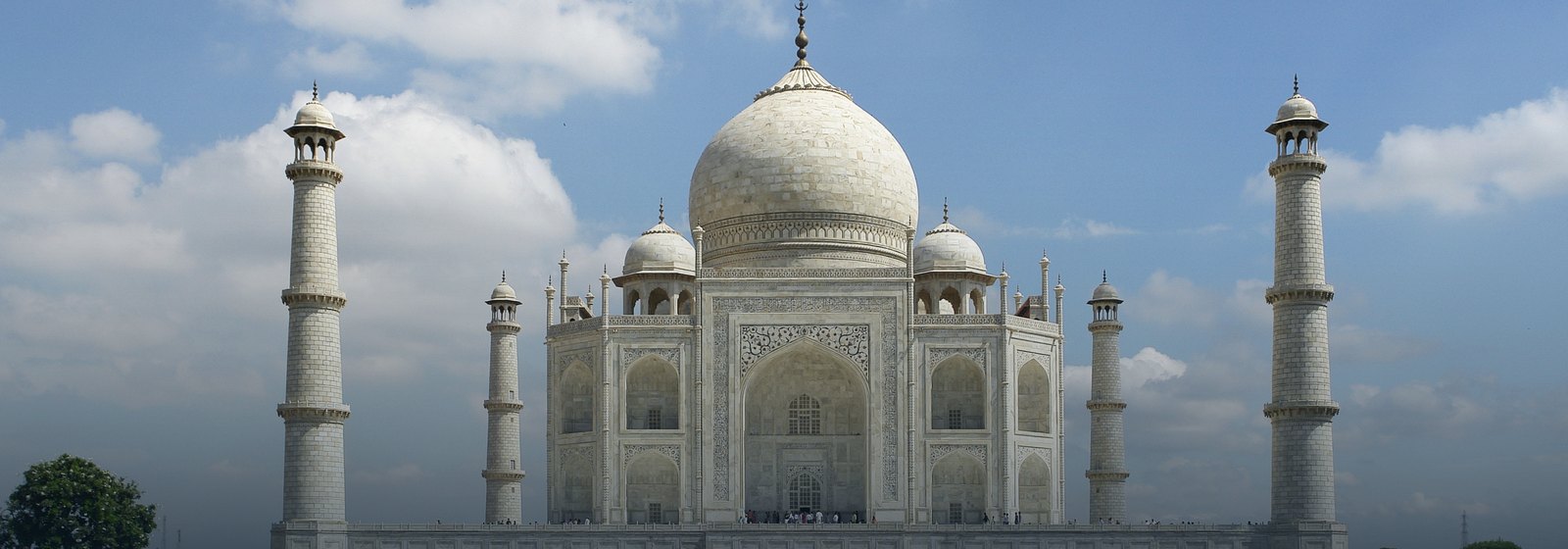
The Taj Mahal is the white marble mausoleum Shah Jahan built for his wife: four minarets, gardens with water channels, its reflection in the water and marble inlay work. Nearby are the red sandstone Agra Fort and the abandoned city of Fatehpur Sikri.
Tickets: Taj Mahal entry around 1,300 rupees for foreigners, Agra Fort is cheaper · 1–2 days
Money-saving tip: Arrive at opening time, 6:00: the queues are minimal and the light is soft. Tickets are cheaper online and include water and shoe covers — don't pay local middlemen separately "for entry".
Jaipur
The pink city of Rajasthan: the Hawa Mahal with its 950 windows, the City Palace, the Jantar Mantar with its stone observatories, Amber Fort on the hill, Jaigarh and Nahargarh above it, plus Man Sagar lake and the monkey temple at Galta.
Tickets: fort entries around 200–500 rupees, there's a combined ticket · 2–3 days
Money-saving tip: Buy the combined ticket for several sights — it works out cheaper than paying separately. Walk or take the local bus up to Amber instead of riding an elephant: it's pricier and slower.
Varanasi
One of the oldest living cities in the world: dozens of ghats, the steps down to the Ganges, where people do laundry, pray, bathe and cremate their dead. The evening aarti ceremony at Dashashwamedh ghat with fire and bells, morning boats and a maze of narrow lanes.
Tickets: accommodation €6–15, sunrise boat around 300–600 rupees with haggling · 2–3 days
Money-saving tip: Book your sunrise boat on the spot and haggle — prices vary three-fold. Look for rooms in the alleys by Assi Ghat rather than on the waterfront: quieter and cheaper.
Goa
A former Portuguese colony: Anjuna, Vagator, Palolem and Agonda beaches, the Basilica of Bom Jesus with the relics of Francis Xavier, the churches of Old Goa, the Portuguese lanes of Fontainhas, fish markets and night markets.
Tickets: accommodation €10–25, bike 400–600 rupees a day · 4–7 days
Money-saving tip: The south is pricier and quieter, the north (Anjuna, Vagator) cheaper and livelier. Renting a bike saves on taxis, but rent from reputable places and photograph any bodywork damage when you pick it up.
Mumbai
The financial capital: the Gateway of India, the Taj Mahal Palace hotel, Chhatrapati Shivaji Terminus in Victorian Gothic style, Marine Drive with its evening "Queen's Necklace", the Dhobi Ghat laundries and Elephanta Island with its 6th-century cave temples.
Tickets: accommodation €15–30, ferry to Elephanta around 600–1,200 rupees · 2–3 days
Money-saving tip: Book the Elephanta ferry and tour at the official piers on the spot. Local trains cost a tenth of a taxi, but at rush hour they're packed solid — travel off-peak.
Udaipur
Rajasthan's "city of lakes": the Jag Mandir palace on its island, the City Palace with its crystal gallery, Lake Pichola with its boats, the Jagdish temple, the Rela Maghri luggage market and evening puppet shows with rooftop barbecues.
Tickets: City Palace entry around 400 rupees, lake boats are paid · 2 days
Money-saving tip: Haveli hotels on the water cost more than rooms two blocks back, and the rooftop view is almost the same. Watch the sunset from the ghats for free.
Jodhpur and the Thar desert
The "blue city" below Mehrangarh Fort, from which you look out over a sea of blue houses; the Umaid Bhawan palace, Jaswant Thada with its marble cenotaphs, Sadar market and a trip out to the Thar dunes with a night in the desert.
Tickets: fort entry around 200–600 rupees, camel safaris from 1,200 rupees · 2 days
Money-saving tip: Camel safaris are cheaper booked in town than through a hotel; take the option with a night under the stars — it costs little more than a day trip and the experience is many times bigger.
Kerala: Alleppey and Munnar
Kerala means Alleppey's backwater canals with their houseboats, the rice fields of Kuttanad, the tea plantations of Munnar, Eravikulam National Park with its tahr goats, Ayurvedic centres and the road through the Cardamom Hills.
Tickets: houseboat night from 3,000 rupees, tea tours are inexpensive · 3–4 days
Money-saving tip: Houseboats are expensive — take a day boat through the canals instead (three times cheaper) and sleep in a guesthouse on the bank. The train from Alleppey to Munnar is the most beautiful ride in Kerala.
Amritsar and the Golden Temple
Harmandir Sahib, the Sikhs' Golden Temple in the middle of a sacred pool, open to everyone, with a free langar kitchen feeding 100,000 people a day. Nearby are the Jallianwala Bagh memorial and the Pakistan border, where the gate-closing ceremony happens every evening.
Tickets: entry free, rooms at the temple by donation · 2 days
Money-saving tip: The food at the temple is free — it's a tradition, not an attraction: go in, eat, and help in the kitchen if you like. Accommodation at the temple is free, but bring your own sleeping bag.
Hampi
The capital of the Vijayanagara empire among giant boulders: the stone chariot, Virupaksha temple, the musical pillars of Vittala, the Lotus Mahal gardens, colonnades and the view over the Tungabhadra river from Matanga Hill, where people gather at sunset.
Tickets: monument entry around 600 rupees, bicycle rental from 150 rupees · 2–3 days
Money-saving tip: The monuments are spread out — rent a bicycle or a scooter. Walk up Matanga Hill for sunset: no ticket needed and the best view in Hampi.
Rishikesh
The yoga capital on the Ganges in the Himalayan foothills: ashrams and yoga schools, the evening aarti at Parmarth Niketan, the Lakshman and Radha temples, the Lakshman Jhula suspension bridge, rafting and the Neer waterfalls, jungle walks and cave meditation.
Tickets: accommodation €5–15, yoga courses from €150 for two weeks · 3–7 days
Money-saving tip: In-person yoga courses are cheaper than online programmes from Western schools, but check the licence and the class size. Rooms in Tapovan cost less than in the centre, and you can walk to the centre across the bridge.
Darjeeling and Sikkim
Tea hills below Kanchenjunga: plantations with tastings, the toy train (a UNESCO site), Tiger Hill viewpoint at sunrise, monasteries and the Padmaja pagoda, and beyond that Sikkim with Khecheopalri lake and Rumtek monastery.
Tickets: train to New Jalpaiguri, accommodation €10–20 · 3 days
Money-saving tip: Tiger Hill at sunrise is worth every penny, but you can get there by shared jeep instead of a tour 4x4. Buying tea at the plantations is cheaper than in the shops in town.
Mysore and Kundala
The city of palaces in Karnataka: Mysore Palace with its Durbar Hall, the Chamundeshwari temple on Chamundi Hill, Tipu Sultan's palace on Srirangapatna island, the Devaraja market, and 90 km away Shivanasamudra falls and Nagarhole reserve.
Tickets: palace entry around 200 rupees, the train from Bangalore is cheaper than the bus · 2 days
Money-saving tip: The Bangalore–Mysore train is cheap and fast, and there's usually room in the sitting class. The palace is lit up on Sundays — go at sunset to see both versions in one visit.
Calcutta (Kolkata)
The city of intellectuals and trams: the Victoria Memorial in Maidan park, Howrah Bridge, Kalighat temple, the Tagore house-museum, New Market, Dakshineswar and the country's oldest metro, the first in India.
Tickets: accommodation €8–20, the metro is pennies · 2 days
Money-saving tip: The tram costs pennies and gives you the best view of the city. Dinner at local-oriented Bengali cafés costs a third of restaurant prices, and ilish fish is worth trying right here.
Madurai and South India
The Meenakshi temple with four gopurams covered in thousands of sculptures, the bazaar all around it, and nearby Rameswaram, Kanyakumari where three seas meet, and Srirangam temple with its seven walls and pillared hall.
Tickets: temple entry free, there are paid special darshan lines · 2 days
Money-saving tip: Temple entry is free and you only pay for a "fast darshan" — go at off-peak hours. Phones and leather aren't allowed inside: the left-luggage counter next door costs pennies.
The Himalayas: Manali and Leh
The road into the high mountains: Manali with the Kullu and Parvati valleys and the Rohtang Pass, and Leh in Ladakh with the Thiksey, Hemis and Lamayuru monasteries, Pangong and Tso Moriri lakes at 4,000+ metres, and incredible silence.
Tickets: bus or flight, accommodation €8–20 · 5–7 days
Money-saving tip: Give yourself 2 days of acclimatisation in Leh without exertion, or altitude sickness will take you down. Drive the Manali–Leh road in season (June–September); the bus is cheaper than a jeep and the views are the same.
Free and off the beaten path
- The ghats of Varanasi — You can watch the morning boats and the evening aarti free from the bank: sitting by the water costs nothing, and you only pay for a boat.
- Goa's beaches — Every beach is public: Anjuna, Vagator, Palolem. Loungers cost money, but your own towel and a palm's shade solve the problem.
- The Golden Temple in Amritsar — Entry is free for everyone, including the food in the langar — that's part of the tradition, not a tourist bonus.
- Morning markets and street food — Samosas, dosa, chaat, masala chai and fresh juice cost 20–80 rupees, and lunch at a local hole-in-the-wall is 100–200 rupees.
- Night trains and station concourses — Travelling between cities by train is cheaper than the bus and saves you a hotel night — sleeper tickets from 300 rupees.
3-week itinerary
Week 1
The Golden Triangle and the Ganges: Delhi — Agra — Jaipur — Varanasi. Two days in the capital with the Red Fort, Qutub Minar and Humayun's Tomb, then Agra with the Taj Mahal at sunrise, pink Jaipur with Amber and Jaigarh forts, and the night train to Varanasi — the ghats, a sunrise boat and the aarti. Transport: trains, express sightseeing, the Delhi metro.
Week 2
Rajasthan: Udaipur — Jodhpur — the Thar desert. The lakes and the Jag Mandir palace, the blue city below Mehrangarh Fort, the marble cenotaphs of Jaswant Thada and a night in the desert on the dunes. Then Amritsar with the Golden Temple and the border ceremony, or straight on south by air. Transport: night buses, trains, jeeps.
Week 3
The south or the Himalayas — your choice. South: Mumbai with Elephanta, Goa with its beaches and Portuguese churches, then via Hampi to Kerala with the Alleppey canals and Munnar tea. Himalayas: Rishikesh with yoga on the Ganges, Darjeeling with its tea hills, and on to Leh or Manali if you have time to acclimatise. Transport: IndiGo low-cost flights, trains, local buses.
Getting there
Main gateways: Delhi (DEL) and Mumbai (BOM). IndiGo and SpiceJet domestic fares start near $20 when booked early. The classic first trip is the Golden Triangle — Delhi → Agra (Taj Mahal) → Jaipur — by train or car with a driver.
Food
- Thali (rice, breads, dal, veg) at local canteens — €1–2
- Street classics: samosas, pakoras, masala chai — €0.2–0.5
- Eat where the local queue is: turnover is the best freshness filter
Transport
Trains are the backbone: Sleeper class is dirt cheap, AC 2/3 tier costs €5–15 on long hauls — book early on IRCTC. In cities, take metered tuk-tuks via Uber/Ola.
Where to stay
Guesthouses €5–10; Goa beach huts from €10–15 in season. Homestays often beat hotels at the same price.
FAQ
How much does a day in India cost?
€15–30: accommodation €6–15, food €3–7 (street food and thali), transport €2–4, monument tickets €3–8. Delhi, Mumbai and Goa cost more than the rest of the country.
When should you go to India?
October–March is the dry, cooler season, best for the north and Rajasthan. April–June is hot, July–September is the monsoon — cheaper and greener, though. The south and the Himalayas run on their own schedule.
Do you need a visa and how do you get one?
Most tourists need an e-visa, applied for online in advance. Conditions, processing times and fees change — check only the official Indian government website.
How much does the Taj Mahal cost?
For foreign visitors, entry is around 1,300 rupees and includes water and shoe covers. Tickets are cheaper and faster online; there are fewer people at dawn.
How do you save money on transport?
Trains instead of planes (sleeper class from 300 rupees at night), the metro in Delhi, Kolkata and Mumbai, tuk-tuks with haggling, bike rental in Goa and Hampi, and IndiGo low-cost flights booked early.
Is India safe and what should you know?
With ordinary caution, yes: drink only bottled water, don't leave your things unattended, haggle politely, avoid the "free guides" at monuments and get a local SIM with data.
What should you eat in India and what does it cost?
A thali (a plate with several dishes) is 100–250 rupees; dosa, samosas, chaat and lassi are 20–80. The cheapest and safest food is where there are plenty of locals, not in empty "tourist" cafés.
How much time do you need in India?
At least two weeks for the Golden Triangle and Rajasthan, three weeks to add Varanasi, Goa or Kerala, and a month to cross the country from south to north without rushing.