
China on a budget: top places, a 3-week itinerary and money-saving tips
China is no longer an expensive destination: with visa-free entry for 30 days the country has become accessible for independent travel, and prices inside are still lower than in Europe — noodles for 12–20 yuan, a hostel bunk for 60–120, the metro for 3–7.
The one expensive thing here is the flight and the high-speed trains between cities. But Beijing with the Forbidden City, the Great Wall, the Terracotta Army, Shanghai's skyscrapers, the "Avatar" mountains of Zhangjiajie and the Longji rice terraces cost far less than the news makes you think.
Below are 20 destinations with indicative prices, 5 free ideas, a three-week itinerary and answers to common questions. All the amounts are indicative prices – check the official website: they change every season, so verify with official sites and on the spot. I also give you what most often blows a budget in China: QR-code payments, internet and train tickets.
China is no longer an expensive destination: with visa-free entry for 30 days the country has become accessible for independent travel, and prices inside are still lower than in Europe — noodles for 12–20 yuan, a hostel bunk for 60–120, the metro for 3–7.
What to see: the main places
Beijing: the Forbidden City and Tiananmen
The imperial palace Gugong covering 72 hectares: nine courtyards, the Halls of Supreme Harmony, imperial gardens and red-lacquered walls. You enter through the southern Wu Men gate and exit through the northern Shenwu Men, then climb Jing Shan hill and see the palace roofs in full. Tickets are sold only online on the official website, against a passport, usually 7 days ahead: in high season they sell out within the first minutes, and without a booking you simply won't be let onto the square.
Tickets: Forbidden City — ticket around 60 yuan (≈€8) (passport and advance booking required); Tiananmen Square is free, but entry is by booking and passport · 1 day
Money-saving tip: Take the ticket for the first morning slot — before 9 a.m. there are almost no tour groups in the passageways. Take the metro to Tiananmendong/dong station and walk: a taxi with a detour through traffic jams costs ten times a metro ride.
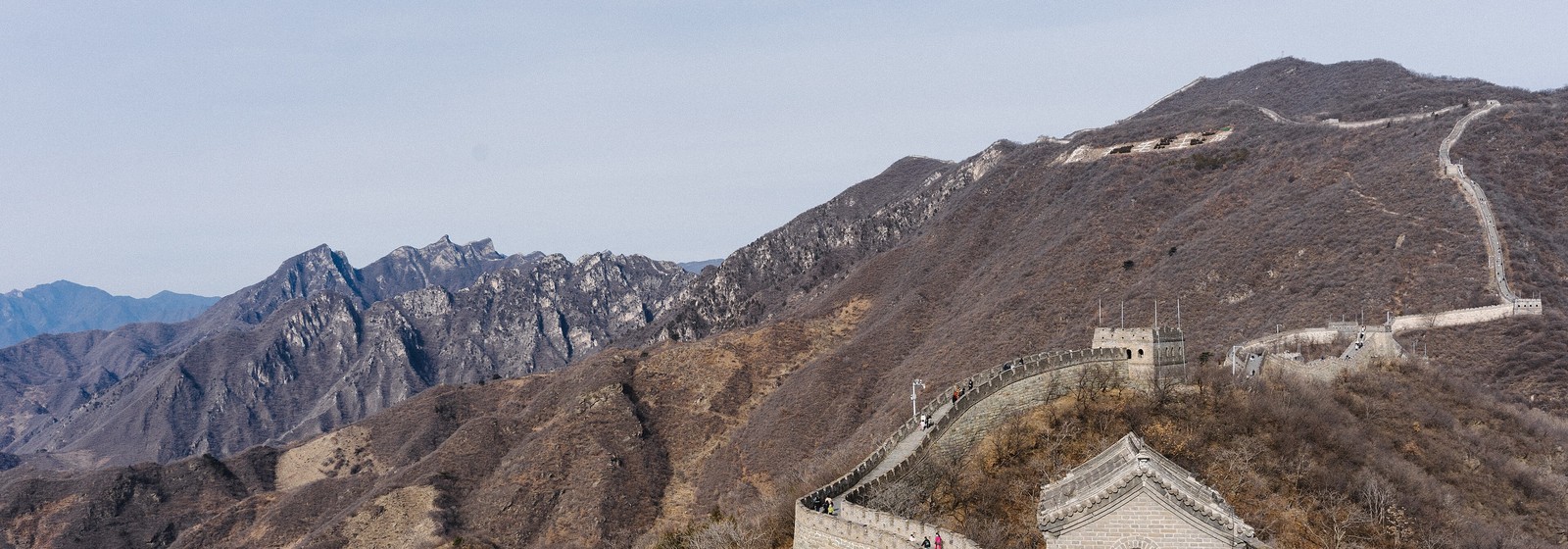
The Great Wall: Mutianyu and Jinshanling
The restored section of the wall closest to Beijing, with even steps and views of the ridge in both directions. Further to the northeast lies the wild Jinshanling: the wall is unrestored, the bricks are crumbling, there are few people, but the climb is steep and demands sturdy shoes. A taxi from Beijing to Mutianyu takes 1.5 hours; the bus from Dongzhimen station takes 2–2.5 hours and is many times cheaper.
Tickets: Mutianyu — ticket around 45 yuan (≈€6); cable car and round-trip transfer from 100 yuan (≈€13) · half a day–a day
Money-saving tip: Bus 916 or the direct shuttle from Dongzhimen instead of a taxi and a "VIP tour with a photographer" saves 300–400 yuan (≈€40–53) per person. Arrive at opening time: by noon dense crowds stream onto Mutianyu, and by 15:00 the buses back to the city are packed.
Beijing: the Temple of Heaven, the Summer Palace and the hutongs
The Temple of Heaven is a park where pensioners sing, dance and play cards in the mornings: the round Qiniandian pavilion stands at the end of the alley, and squirrels live all around it. The Summer Palace is an imperial park with Kunming Lake, a long corridor with painted beams and the Hill of Longevity. In the evening head to the hutongs: the narrow alleys of Nanluoguxiang and the neighbourhoods around the Drum and Bell Towers, where laundry is still hung out and baozi are still sold.
Tickets: Temple of Heaven — around 15–35 yuan (≈€2–4.5), Summer Palace — 30–60 yuan (≈€4–8) depending on the season · 1–2 days
Money-saving tip: In the parks, buy the combined ticket only for the main halls — entry to the grounds costs 10–15 yuan (≈€1.5–2) and you already see 80% of the beauty there. Dinner in the hutongs for 30–40 yuan (≈€4–5) is three times cheaper than restaurants near the Forbidden City.
Xi'an: the Terracotta Army and the city wall
Eight thousand clay warriors, drawn up in battle formation 2,200 years ago and found by peasants digging a well. Three excavation pits, a museum of bronze chariots and bronze cranes. The city itself is no less interesting: 14 kilometres of city wall that you ride along on a bicycle above the rooftops, the Bell and Drum Towers, the Big Wild Goose Pagoda and the Muslim Quarter with its street food.
Tickets: Terracotta Army — ticket around 120 yuan (≈€16); the wall — 45 yuan (≈€6); bike rental on the wall — about 45 yuan (≈€6) · 2 days
Money-saving tip: Bus 306 (Yu-5) from the eastern bus station to the army costs 7–8 yuan (≈€1) instead of 200 yuan (≈€27) for a taxi. In the Muslim Quarter don't take the first stalls at the entrance — deeper in, prices drop by a third and the food is fresher.
Shanghai: the Bund, Yu Garden and the skyscrapers
The Bund is a kilometre of colonial facades facing futuristic Pudong: just come at sunset to watch the skyscrapers switch on their lights. Yu Garden with its rockeries and teahouse, the old quarter around it, the Jade Buddha Temple, and on the other side of the river the Shanghai Tower, the Jin Mao Tower and the World Financial Center. The French Concession with its plane trees, bicycles and small cafés is worth a separate visit.
Tickets: The Bund waterfront and park area — free; Yu Garden — around 40 yuan (≈€5); the Shanghai Tower observation deck — from 180 yuan (≈€23) · 2–3 days
Money-saving tip: Don't pay for a river cruise (150–300 yuan, ≈€20–40): the ferry across the Huangpu costs 2 yuan (≈€0.3) and travels the same water. The observation deck in the Jin Mao Tower or the Shanghai World Financial Center is cheaper than the Shanghai Tower, and the view is almost the same.
Zhangjiajie: the "Avatar" mountains and the glass bridge
Sandstone pillars up to 300 metres high that you recognise instantly: this is where the floating islands of "Avatar" were filmed. Inside the park are the Bailong lift built into the cliff, cable cars and a walkway over a glass floor, and 40 kilometres away Mount Tianmen with its 999-step "stairway to heaven", a natural arch and a road with 99 bends.
Tickets: National park — around 228 yuan (≈€30) for 4 days; the Bailong lift and cable car — from 70–75 yuan (≈€9–10) each; the glass bridge — about 140 yuan (≈€18) · 3–4 days
Money-saving tip: Stay in Wulingyuan village rather than Zhangjiajie city: a bunk there is 60–120 yuan (≈€8–16), the park entrance is nearby, and you don't have to pay for a taxi every day. The park ticket is valid for several days — don't buy it again on the second and third day.
Guilin and Yangshuo: the Li River and the Longji terraces
Karst "sugar-loaf" mountains above emerald water: the classic landscape that was printed on banknotes and in paintings. You can take the big four-hour cruise from Guilin to Yangshuo, or take a regular bus and travel along the bank — the mountains are the same. In Yangshuo you take a bamboo raft on the Yulong River, rent a bicycle and ride between the rice fields, and to the north are the Longji terraces, where rice grows in steps up the slope for 60 kilometres.
Tickets: Li River cruise — around 210–450 yuan (≈€28–60); bamboo raft in Yangshuo — 120–200 yuan (≈€16–27); entry to the Longji terraces — about 80 yuan (≈€10) · 3 days
Money-saving tip: The Longji terraces are sold at the entrance with no bus timetable — take a seat in a minibus from Yangshuo bus station for 40–50 yuan (≈€5–7) rather than an "official tour" for 200 (≈€27) with lunch. All food in Yangshuo is cheaper in the side alleys than on the main street of the West Quarter.
Chengdu: pandas and teahouses
Chengdu is a city where life flows slowly: bamboo teahouses with woven armchairs, mahjong in the street, street food from hotpot to crispy dumplings and, of course, the panda base in Beifeng, where the animals have breakfast at 8:30 and by 10 a.m. are already napping. From here it's easy to make a trip to the Leshan Buddha — a 71-metre statue carved straight into the cliff at the confluence of rivers — or to the ancient town of Huanglongxi and the Dujiangyan irrigation system.
Tickets: Panda base — ticket around 55 yuan (≈€7); tea in a people's teahouse — 10–25 yuan (≈€1.5–3) · 2 days
Money-saving tip: Arrive at the panda base at 7:30–8:00: pandas are active only in the morning, and by lunchtime the queue for bus 87 from the metro doubles. Tea in a teahouse costs 15 yuan (≈€2) and comes with free refills all day — the cheapest "coffee break" in China.
Hangzhou: West Lake and the tea plantations
The lake the Chinese have strolled around for a thousand years: pagodas, little bridges, sampan boats, lotuses in July and the Leifeng Pagoda on the hill. On the opposite side from the centre are the Longjing and Meijiawu tea villages, where you taste green tea right on the slopes and are told how the first flush differs from the later one. An hour on the high-speed train from Shanghai and you're in the greenest city of the Yangtze delta.
Tickets: West Lake — free; entry to Lingyin Temple — about 30 yuan (≈€4), plus a separate ticket for the halls with the Buddha · 1–2 days
Money-saving tip: Walk around the lake under your own steam: bicycle rental is 30–60 yuan (≈€4–8) a day versus 100+ yuan (≈€13) for a "package lake tour". Buy tea in the villages by weight with a tasting, not in a "tea ceremony" at the entrance — there the price per pack is three times higher.
Suzhou: classical gardens and canals
A city of canals half an hour by high-speed train from Shanghai: stone bridges, white walls with tiled roofs, boats and nine classical gardens on the UNESCO list. The Humble Administrator's Garden is the largest and most beautiful, with pavilions above ponds; the Lion Grove Garden is famous for its labyrinth of rocks. In the evening the illuminated canals around Pingjianglu look like a stage set — and that's free.
Tickets: Humble Administrator's Garden — around 70 yuan (≈€9); Lion Grove Garden — 40 yuan (≈€5); a canal boat ride — 100–150 yuan (≈€13–20) · 1–2 days
Money-saving tip: One or two gardens are enough: tickets are 40–70 yuan (≈€5–9) everywhere and the layout is similar. A canal boat ride is cheaper to replace with a regular ferry on the city's water route for 3–5 yuan (≈€0.5–0.7).
Huangshan: the Yellow Mountains and Hongcun village
Granite peaks in the clouds, pines growing out of cracks in the rock, and the famous "Flying Rock" that photographers come from all over the world to see. Walking up takes 3–4 hours on steep steps; the cable car takes 10 minutes. Down below are the villages of Hongcun and Xidi with ponds reflecting old houses with horse-head gables — UNESCO sites.
Tickets: Park entry — around 190 yuan (≈€25) in season; round-trip cable car — about 160 yuan (≈€21); an overnight stay on top — from 200 yuan (≈€27) · 2 days
Money-saving tip: Check the forecast: in clouds and rain you can't see anything, and the ticket is non-refundable. A night in a village at the foot of the mountain costs 100–200 yuan (≈€13–27) versus 400–800 (≈€53–107) in a hotel at the summit — and you still make it up for sunrise.
Pingyao: the ancient city within its walls
One of the few medieval cities of China preserved in its entirety: six kilometres of walls that you walk in a loop, towers, temples, the country's oldest financial firm, the "Rishengchang" draft bank, where the world's first paper notes were invented. In the evening the city empties of tour groups, red lanterns are lit, and you can eat in peace in noodle shops for 15–25 yuan (≈€2–3).
Tickets: Combined ticket to the main sights — around 125 yuan (≈€17), valid for 3 days; entry to the city — free · 1–2 days
Money-saving tip: The combined ticket is only needed if you want to go inside all the museums; walking the walls and streets is free and delivers the same emotions. Sleep in a "siheyuan" courtyard inside the city — prices are the same as in the new hotels outside the walls, but the atmosphere is different.
Dunhuang: the Mogao caves and the singing dunes
An oasis on the Silk Road, where 735 caves with frescoes and Buddha statues from the 4th to the 14th century are carved into the cliffs — the ticket is strictly by advance booking and with a cap on numbers. Nearby are the Mingsha Shan sand dunes and the crescent-shaped Yueyaquan lake, which hasn't dried up for two thousand years: you climb the ridge and the sand hums under your feet.
Tickets: Mogao — ticket around 238 yuan (≈€32) by booking; Mingsha Shan sand park — 120 yuan (≈€16); camel ride — 100 yuan (≈€13) · 2 days
Money-saving tip: Mogao slots on the official website sell out two weeks ahead — book as soon as the dates open. Go to the dunes after 17:00: the heat eases and the ticket for the evening slot is cheaper than the daytime one.
Chongqing: Hongyadong and hotpot
A city on the slopes between the Yangtze and Jialing rivers, where the metro runs straight through a residential building and streets descend in staircases from the eighth floor to the first. Hongyadong is a 19th-century eight-storey complex with views over the rivers and the lights; nearby are river cable cars, old port districts and the best hotpot in the country — a boiling cauldron with Sichuan pepper that people here share at one table in winter.
Tickets: Hongyadong observation deck — from 80 yuan (≈€10); hotpot dinner — 60–120 yuan (≈€8–16) per person · 1–2 days
Money-saving tip: Hotpot for one is expensive: order a shared pot for 3–4 people and one set for everyone — it works out half the price. Stay in the Jiefangbei area: everything is walkable from there, and you don't spend on frequent taxis up and down the switchbacks.
Xiamen and Gulangyu Island
A seaside city in the south: colonial villas, plane trees, the old Shapowei district with its street food, and Gulangyu Island, where vehicles are banned and 20,000 people live among colonial architecture, tropical gardens and the villas of tea merchants. Nearby are the round Hakka earth buildings, the tulou, on the UNESCO list: climbing to the second floor and walking the museum inside a clan house is worth a whole day.
Tickets: Ferry to Gulangyu — around 35–100 yuan (≈€4.5–13); entry to the island — about 100 yuan (≈€13); Nanputuo Temple — free · 2 days
Money-saving tip: Tickets to Gulangyu are capped per day: buy online in advance, otherwise only the expensive "commercial" pier is left. The tulou are cheaper to see with an overnight stay on site (bunk 80–150 yuan, ≈€10–20) — a day trip from Xiamen costs twice as much.
Wuzhen and the water towns of the delta
Canal water towns between Shanghai and Hangzhou: stone bridges, house verandas right over the water, rowing boats and morning mist that makes photographs look like ink paintings. Wuzhen is the most famous and the most crowded; nearby Nanxun and Xitang are cheaper and quieter, and in the evening, when the day-trippers leave, the canals are lit only by lanterns on the water.
Tickets: Entry to Wuzhen — around 150 yuan (≈€20); Xitang — about 100 yuan (≈€13); an overnight stay inside — from 200 yuan (≈€27) · 1–2 days
Money-saving tip: Visit a water town with an overnight stay on a weekday: the evening entry ticket is a quarter cheaper, and in the morning before 8 you can stroll while the ticket ladies and the groups haven't opened up. A regular bus runs from Shanghai — 30–40 yuan (≈€4–5) instead of an organised tour for 300 (≈€40).
Harbin: the ice city and its Russian heritage
A city with a Russian history: the red-brick St. Sophia Cathedral, Central Street with its cobbles and European facades, bread and ice cream made to early-20th-century recipes. In January a city is built here out of ice cut from the Songhua: fortresses, cathedrals and slides with lighting, while the snow park on Sun Island lasts until February. In winter minus 25 is normal, so bring what you can't buy locally: real felt boots and a second layer of thermal underwear.
Tickets: Ice and Snow Festival — around 300–330 yuan (≈€40–44); St. Sophia Cathedral — 20 yuan (≈€2.5); Central Street — free · 2–3 days
Money-saving tip: The ice festival ticket is cheaper in the daytime, and after 21:00 there are discounts on some days — check on the official page. There are night trains from Beijing for 200–300 yuan (≈€27–40): you sleep on the way and don't pay for a hotel.
Kashgar and Xinjiang
Western China, where time runs on Beijing clocks but people have dinner in the dark: the old town of Kashgar with its mud-brick houses, leather and metal craftsmen, the Sunday livestock market, the Id Kah Mosque and labyrinths of quarters where Uyghurs live. This is the country's most remote region, reached by plane from Beijing and Urumqi; travelling by bus takes days, so for a budget it matters to count on a low-cost flight or a train.
Tickets: Kashgar old town — free; Id Kah Mosque — around 45 yuan (≈€6); a flight from Urumqi — from 500 yuan (≈€67) · 3 days
Money-saving tip: Look for the Beijing–Kashgar flight with a transfer in Urumqi: a direct one is rarely cheaper, and the connection adds half a day in a city that still has things to see. Accommodation in the old town is 100–200 yuan (≈€13–27), and all the sightseeing is done on foot.
Lhasa and Tibet
The Potala Palace on its hill — 13 storeys of red and white palace with a thousand rooms, the Jokhang Temple in the very heart of the old city, where pilgrims come all day, and Barkhor, a circular street of shops, prayer wheels and the smell of butter. Tibet requires a special permit: independent travel is impossible, and it is arranged through a travel agency, usually together with a guide and transport.
Tickets: Potala Palace — around 200 yuan (≈€27); Jokhang Temple — 85 yuan (≈€11); the mandatory tour permit — from 500–800 yuan (≈€67–107) · 4–5 days
Money-saving tip: The permit isn't issued to individuals: treat it as a mandatory fee, and join a group of 4–6 people — that halves the cost per person. Acclimatisation is essential: don't go up to the Potala on your first day in Lhasa, otherwise a day in bed costs more than any ticket.
Qingdao: German architecture and the brewery
A seaside city where the old German quarter with tiled roofs and narrow streets descends to the sea, and the alleys are full of mugs of local beer and fried clams. The brewery museum tells the story of the 1903 plant, and at the exit they pour unfiltered beer. A separate trip is Mount Lao with its Taoist temples and views over the coast: an hour by bus from the centre.
Tickets: Tsingtao Beer Museum — around 50–60 yuan (≈€7–8) with a tasting; the beach — free; Zhanshan Temple — 15 yuan (≈€2) · 2 days
Money-saving tip: Beer in shops costs 4–8 yuan (≈€0.5–1) a bottle versus 30–50 (≈€4–7) in bars by the sea. Don't buy a "sea trip" at the beach: a regular ferry to the islands is many times cheaper, and Qingdao's beaches are free anyway.
Free and little-known
- The Huangpu ferry in Shanghai — Two yuan (≈€0.3) for a ticket and the same Pudong panorama as on a 200-yuan (≈€27) cruise: you board a city ferry by the Bund and cross to the other bank in ten minutes.
- Beijing's parks in the morning — Entry to the Temple of Heaven park or Jing Shan costs 2–15 yuan (≈€0.3–2) or is free in the morning, and it's the locals themselves who sing, dance and play cards there — that's the free part of the city.
- West Lake in Hangzhou — The lake and the embankments are free around the clock; a rental bicycle is 30–60 yuan (≈€4–8) a day, and the lotuses in July look better than any paid park.
- Evening lights on the Bund and the Pingjianglu canals — From 18:30 the lights come on along the Bund, and in Suzhou you can walk the illuminated canals and bridges of the Pingjianglu area without a ticket.
- Beijing's hutongs and markets — The alleys around the Drum and Bell Towers and the Nanluoguxiang market are free to enter, and the baozi and tea there are cheaper than in any tourist café.
A 3-week itinerary
Week 1: Beijing
Five days in the capital: the Forbidden City and Tiananmen, the climb up Jing Shan, the Temple of Heaven in the morning, the Summer Palace, a day on the Great Wall (Mutianyu by bus), and in the evening the hutongs and dinner in the alleys. Stay in the Dongzhimen area or by a metro station — with a hostel at 80–150 yuan (≈€11–20) and the metro at 3–7 yuan (≈€0.4–1), the whole city is within reach.
Week 2: Xi'an and Chengdu
High-speed train Beijing–Xi'an (4.5 hours, around 500 yuan, ≈€67) — two days: the Terracotta Army by bus 306, a bicycle along the city wall, the Muslim Quarter. Then a train to Chengdu (3–4 hours): the panda base in the morning, teahouses, the Leshan Buddha in a single day. A night train instead of a hotel saves 150–250 yuan (≈€20–33) and a day of time.
Week 3: Guilin, Yangshuo and Shanghai
Flight Chengdu–Guilin (around 400–600 yuan, ≈€53–80) or a night train, then Yangshuo with rafts on the Yulong, bicycles between the rice fields and the Longji terraces. The finale is Shanghai: a high-speed train from Guilin or a flight, the Bund at sunset, Yu Garden, the French Concession, and if you like, one day in Suzhou or a water town.
If you have a spare week
Add Zhangjiajie (the "Avatar" mountains, 3 days), Huangshan with an overnight stay in a village, or Harbin in winter. The logic is this: don't drag yourself through every city in a row — trains eat both time and money; better to pick one city per region and stay there for three or four days.
Getting there
Direct flights from Europe to Beijing (PEK/PKX), Shanghai (PVG) and Guangzhou (CAN) run all year; connecting through Istanbul, Dubai or Almaty is usually cheaper but longer. Inside the country everything runs on high-speed trains: Beijing–Xi'an 4.5 hours, Xi'an–Chengdu 3–4 hours, Shanghai–Hangzhou 1 hour. Train tickets are tied to your passport and booked via the 12306 app or Trip.com; seats open about 15 days ahead and sell out instantly around public holidays.
Food
- Street noodles and baozi — 10–25 yuan a bowl; breakfast on the street costs a third of a cafe
- Jianbing and fried dumplings — 8–20 yuan, the fastest snack on the road
- Tea in a people's teahouse — 10–25 yuan with free refills all day
- Hotpot in Chongqing and Chengdu — 60–120 yuan per person for a shared pot, cheaper in a group
Transport
Metro rides cost 3–7 yuan in Beijing, Shanghai, Chengdu and Xi'an and run until midnight; bags are scanned at every station, so allow extra time. Between cities: G high-speed trains from 500 yuan per 1000 km, night trains with a berth for 200–300 yuan — a night train also saves a hotel night. In town use the metro and buses; Didi is faster but pricier when you don't speak Chinese. Bike rental is 30–60 yuan a day.
Where to stay
Hostel dorms 60–150 yuan, guesthouses in old quarters 100–250, 4-star city hotels from 350. In Beijing stay near Dongzhimen or Nanluoguxiang metro, in Shanghai in Puxi by the French Concession, in Yangshuo and the water towns book on the spot rather than at a tourist «resort». Around National Day (1–7 October) and Chinese New Year prices double — book ahead.
FAQ
How much does a day in China cost?
€25–45: a hostel bunk 60–120 yuan (€8–15), food 40–80 yuan at stalls and in noodle shops, transport 10–20 yuan on the metro, entrance tickets 50–200 yuan if you go around paid attractions. Without tickets and high-speed trains, €25–30 a day is enough.
Do Russians need a visa for China?
For short trips visa-free entry applies — an indicative 30 days — but the rules have changed several times. Before you travel, check the website of the Chinese embassy or the foreign ministry, and confirm the period at the embassy: overstaying a visa-free stay risks a fine and a ban on entry.
How do you pay in China without a local card?
Cash is accepted, but in big cities everything is built on QR codes. Set up Alipay or WeChat Pay in advance and link a foreign card — you'll be able to pay at a stall, on the metro and in a museum. Keep 300–500 yuan in cash in case a terminal won't take your card.
Does the internet work and do you need a VPN?
Google, Instagram, WhatsApp and some services are blocked. Buy an eSIM with a ready-made workaround or set up a VPN in advance, before you enter: once inside China you may no longer be able to download the app. Maps are also better installed offline — Google Maps doesn't work, so use local or prepared offline maps.
How do you buy train tickets?
Through the 12306 app, Trip.com or the railway website — against a passport, with seats opening about 15 days ahead. High-speed trains (G) are more expensive than regular ones but save days. A seat in a regular carriage costs many times less than a seat on a high-speed train, so night trains are the best way to save on a hotel.
Is street food dangerous?
Street food in China is safe if the stall is popular with locals: look at the queue. Drink bottled water, be wary of raw vegetables and ice in cheap places, and eat hotpot in moderation the first time — Sichuan pepper hits the stomach hard.
When is the best time to go to China?
April–May and September–October bring comfortable temperatures in Beijing, Shanghai and the southern cities. July–August in Beijing and Shanghai are hot and rainy; in winter accommodation is cheaper and there are no queues, but Harbin is minus 20–25, and in Tibet it's cold and some routes are closed.
Is English enough and how do you communicate?
In hotels and at railway stations there is English, but in noodle shops and taxis there often isn't. What helps: an offline translator on your phone, screenshots of names in Chinese, and showing the driver the address. Learn two words: "xiexie" (thank you) and the numbers for haggling at the market.