
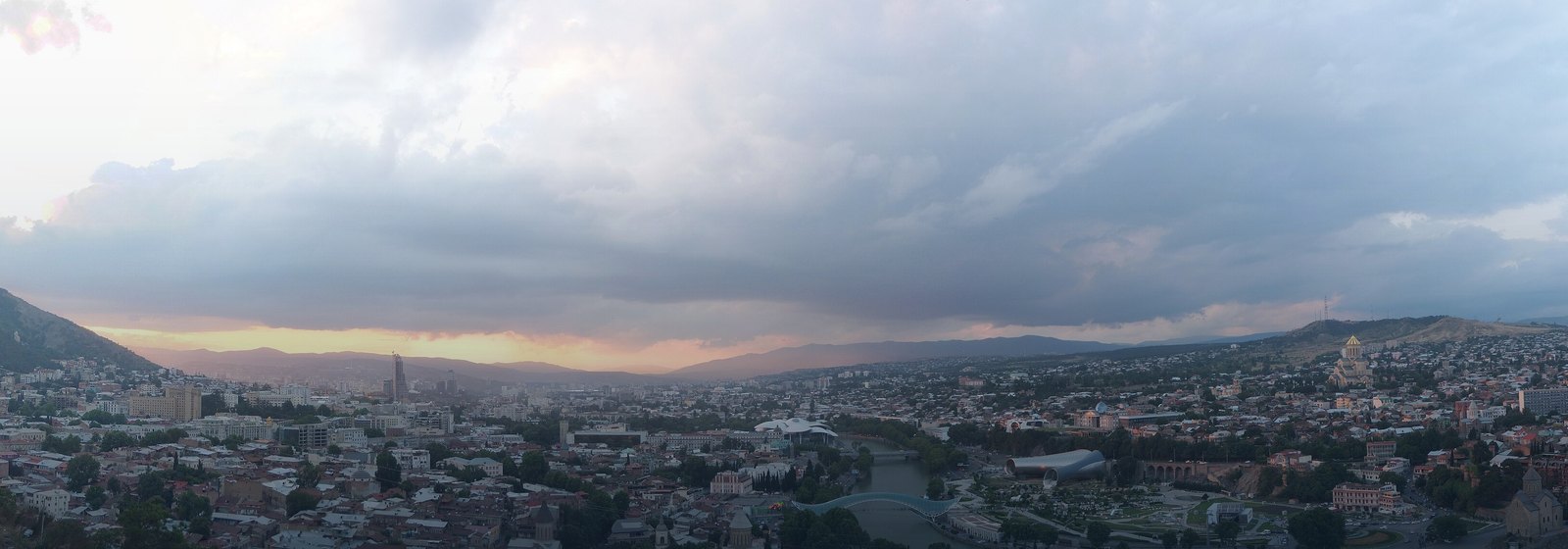
Tbilisi on a Budget: Top Sights, 3-Day Itinerary, and Money-Saving Tips
Tbilisi is one of those rare cities where travelling on a budget doesn't feel like a compromise. Its main sights are free or almost free: the old town, Narikala Fortress, the Bridge of Peace, churches, parks, and the views from the hills. You spend mostly on accommodation and food, not on tickets.
Below you'll find 18 places genuinely worth seeing, 5 free ideas for when your wallet is empty, a three-day itinerary, and answers to common questions. I've given all prices as a guide: they change every season, so check the official sites and verify on the ground. Transport, markets, and the Metromoney card will save you more than any discount.
Tbilisi is one of those rare cities where travelling on a budget doesn't feel like a compromise. Its main sights are free or almost free: the old town, Narikala Fortress, the Bridge of Peace, churches, parks, and the views from the hills. You spend mostly on accommodation and food, not on tickets.
What to see: the main sights
Narikala
A fortress on the ridge above the old town: 4th-century walls, towers, the Church of St Nicholas, and the best panorama of Tbilisi over the Mtkvari. You climb the steep lane up from Abanotubani or take the cable car from Rike Park. From the top you can see the whole old town, the Bridge of Peace, and the sulphur baths. Sunset here is an attraction in itself — come an hour before dark. In summer, bring water; it costs more up there.
Tickets: Entry to the fortress is free; the cable car from Rike Park is paid — approximate, check the official site · 1–1.5 hours
Money-saving tip: Walking up from Abanotubani is free; the cable car runs on the Metromoney card, and a taxi up is pure overspending.
Abanotubani and the sulphur baths
The sulphur bath quarter that gave Tbilisi its name: 'tbili' means warm. Domes with window-holes poke straight out of the ground, with narrow passages and a small waterfall between them. The public bath is cheaper; a private room with a pool is more comfortable and costs more. Nearby are a mosque, an Armenian church, and a synagogue — the whole quarter reads like a history textbook. The sulphur smell is sharp, but you get used to it in a couple of minutes.
Tickets: A private room with a bath from ~20–40 lari (approximate, check the official site) · 1.5–2.5 hours
Money-saving tip: Come on a weekday morning: it's cheaper and there's no queue; your own towel and slippers save you the rental fee.
Metekhi
A church on the cliff above the Kura, with a view over the river and the Bridge of Peace. It was built in the 13th century on the site of the palace of King Vakhtang Gorgasali. Inside it's restrained and quiet, and there are usually few tourists. Below the cliff there's a pier and an embankment where it's pleasant just to stand. It's a convenient place to start a walk through the old town.
Tickets: Free entry · 30–40 minutes
Money-saving tip: Don't pay for the 'viewing platform' next door — the view from the church's free courtyard is just as good.
Sioni (Sioni Cathedral)
The main cathedral of old Tbilisi, on the bank of the Kura and consecrated to the Dormition of the Mother of God. Inside there are 19th-century frescoes and silence; outside, crowds of tourists and tour groups. It stands two steps from the Bridge of Peace, so it usually goes on the same route with it. Women should bring a headscarf, and men should skip the shorts. Photography inside is usually not allowed.
Tickets: Free entry · 30 minutes
Money-saving tip: Walk in for free on any day; skip the 'cathedral tour' offered at the entrance — the essentials are on the signs.
Anchiskhati
One of the oldest churches in the city, from the 6th century, next to the Metekhi Bridge. It's small and made of stone, with an old icon and a very cosy courtyard. Tour groups almost never come here, so you can sit in peace. Nearby are flea-market stalls and a passage into the old town. A good spot to rest in the shade.
Tickets: Free entry · 20–30 minutes
Money-saving tip: Combine it with a free walk along the embankment — no separate tickets are needed here.
Bridge of Peace
A glass pedestrian bridge over the Kura, lit by thousands of bulbs in the evening. It links Rike Park and the old town, so you'll cross it more than once. By day it's just a handy crossing; at night it's one of the most photographed spots in the city. There's a descent to the river under the bridge. Perfect for an evening walk that costs zero lari.
Tickets: Free · 15–20 minutes
Money-saving tip: Come after sunset: the lighting is free, and from the bridge you can see both Narikala and Metekhi.
Rike Park
A riverside park between the Bridge of Peace and Europe Square, with fountains, lawns, and a stage. The cable car to Narikala leaves from here, and river cruises start here too. In the evening families stroll, musicians play, and the fountain lights come on. It's a handy staging point between the old town and Rustaveli. On hot days the shade of the trees is a lifesaver.
Tickets: The park is free; the cable car and Ferris wheel are paid (approximate, check the official site) · 40 minutes – 1 hour
Money-saving tip: Strolling through the park and watching the fountains is free; pay for rides with Metromoney rather than handing over cash.
Mtatsminda and the funicular
A mountain above the city with a park, the Church of St David, and a huge panorama. The funicular runs from Rustaveli Avenue, and its glass carriages go right through the greenery. At the top there's a Ferris wheel, cafés, and the Pantheon of Writers with the graves of famous Georgians. You can walk up the winding road, but it's long and uphill. The sunset is better from here than from anywhere else in the city.
Tickets: Funicular — paid with the Metromoney card (approximate, check the official site) · 1.5–2 hours
Money-saving tip: Buy a Metromoney card in the metro and pay for the funicular by card — cash costs more and isn't always accepted.
Sameba Cathedral
The Cathedral of the Holy Trinity on Elia Hill, the largest church in Georgia. It's very tall and bright inside, with mosaics and a lower church. From the platform in front of the entrance there's a great view of the city and the Tbilisi Sea. It's easy to get here by metro to Avlabari and then walk up. Dress modestly: a headscarf and long trousers won't go amiss.
Tickets: Free entry · 40 minutes
Money-saving tip: Walk up from Avlabari metro instead of taking a taxi — the climb takes about fifteen minutes.
Rustaveli Avenue
The city's main street: theatres, museums, cafés, shops, and parliament. The funicular to Mtatsminda starts here, and the National Museum stands here too. Walking it in the evening is a free way to feel the city. Along the way there are plenty of exchange offices and khachapuri spots. The street is long, so wear comfortable shoes.
Tickets: Free · 1–1.5 hours
Money-saving tip: Change money at the exchange offices on Rustaveli and compare rates at two or three places — the difference is noticeable.
Georgian National Museum
The country's main museum on Rustaveli Avenue, known for its Colchian gold collection. A separate hall is dedicated to the Soviet occupation — hard to see, but important. The exhibit labels are in English, so you'll manage without a guide. On a hot or rainy day it's the perfect shelter. There are sometimes discount days or reduced entry — check the museum's website.
Tickets: Ticket is paid (approximate, check the official site); usually cheaper for students and schoolchildren · 1.5–2 hours
Money-saving tip: Check the museum's site for discount-entry days: a student card saves a noticeable part of the price.
Dry Bridge (flea market)
A flea market along the embankment under the bridge, selling Soviet-era items, crockery, badges, carpets, and antiques. Haggling is a must: the first price is usually about double. You can also find good wool socks and old vinyl records here. It's best to come on a weekend morning, when there's more choice. Not everything called an antique actually is — look carefully.
Tickets: Free entry, purchases by negotiation · 40–60 minutes
Money-saving tip: Start haggling at half the asking price and walk away if they won't budge — they often call you back.
Dezertirka
A big, colourful market on the edge of town, where people go for spices, cheese, churchkhela, and homemade wine. The atmosphere is noisy and genuine, with far fewer tourists than in the centre. Souvenirs and sweets are cheaper here than on Rustaveli. There are rows of ready-to-eat food — you can have lunch very cheaply. It's easy to reach by metro to Vagzlis Moedani station.
Tickets: Free entry; fruit, cheese, and wine sold by weight · 1 hour
Money-saving tip: Try before you buy: almost everywhere they'll let you taste the cheese, wine, and churchkhela for free.
Vake Park
A large green park in the upscale Vake district, with a pond, a fountain, and playgrounds. A great place for a picnic with market food and for a break from the heat. There are plenty of cafés around and good transport links. In the evening people jog, walk their dogs, and cycle here. Entry is free at any time of year.
Tickets: Free · 1 hour
Money-saving tip: Buy food at the supermarket nearby and picnic by the pond instead of going to a restaurant.
Botanical Garden
A huge garden in the gorge behind Narikala, with a waterfall, little bridges, and views over the old town. The paths are steep and long, so allow extra time. There's an entrance at the top, from Narikala, and one at the bottom, from Abanotubani. In summer it's noticeably cooler here than on the streets. There are almost no cafés inside, so bring water with you.
Tickets: Ticket is paid (approximate, check the official site) · 1.5–2 hours
Money-saving tip: Enter from the bottom at Abanotubani and climb up to Narikala — you save on the lift and see more.
Chardali and Aghmashenebeli
The former Jewish street and the main avenue of the left bank — the district where the city's trendy life has moved. There are bars, coffee shops, wine stores, and old apartment buildings with balconies. A walk along Aghmashenebeli and down Chardali is free and very photogenic. In the evening the area is noisy and lively; by day it's calm and green. Dezertirka and the railway station are close by.
Tickets: Free · 1.5 hours
Money-saving tip: Check the menu at the door and go for 'a glass of wine + a snack' at a bar — it's cheaper than a full dinner.
Tbilisi Sea
A reservoir on the edge of the city where locals go to swim and grill shashlik. There's a beach, an embankment, and areas with gazebos, and entry is free. You can get there by marshrutka or taxi; the trip takes about half an hour. The water is warm in summer, but it's best to go in where other people are swimming. A great free 'beach day' if you don't fancy travelling to the sea.
Tickets: Free; sun loungers and cafés optional · half a day
Money-saving tip: Bring your own food and water: cafés on the shore charge two or three times city prices.
Mtskheta
Georgia's ancient capital, half an hour from Tbilisi, where the Jvari Monastery stands at the confluence of the Kura and the Aragvi. Nearby are Svetitskhoveli Cathedral and the Samtavro convent. Jvari rises on a hill, and the view of the two rivers meeting is one of the most famous in the country. The cheapest way there is the marshrutka from Didube metro station. Half a day is enough if you skip taxis and guided tours.
Tickets: The trip by marshrutka from Tbilisi (approximate, check the official site); entry to the monasteries is free · half a day or a full day
Money-saving tip: Go by marshrutka and walk — taxi drivers at Jvari ask noticeably more for the same trip.
Free and off the beaten path
- Walking up to Narikala from Abanotubani — You follow the crooked lane past the sulphur baths and ten minutes later you're on the fortress walls. The panorama is the same as for those who took the cable car, and it costs nothing. Along the way you pass old courtyards and a little waterfall.
- A walk through Sololaki — The quarter between Rustaveli and the old fortress, with carved balconies, inner courtyards, and quiet. It's not a museum but a residential district, so just wander the lanes and look at the houses. You can peek into the courtyards as long as you keep the noise down.
- Mtatsminda Park and the Church of St David — Entry to the park and the church is free, and the view of the city is the same one people pay for on the Ferris wheel. Walk up the winding road or ride the funicular with Metromoney. The Pantheon of Writers is next door — also without a ticket.
- The Tbilisi Sea embankment and beach — Entry to the beach and the embankment is free, and swimming costs nothing. Bring water, food, and a towel and you get a full day out. In the evening the water is warm and there are fewer people.
- An evening walk along Aghmashenebeli and Chardali — A district with lit-up façades, street musicians, and the windows of wine shops. You can wander it for hours without spending a single lari. Just walk along the avenue and turn into the lanes with balconies.
3-day itinerary
Day 1
Start the morning in Abanotubani: the sulphur baths, the domes, and the lanes around them. Then walk up to Narikala, descend into the Botanical Garden, and come out by Metekhi and Anchiskhati. At midday, have lunch at an inexpensive café with khachapuri and walk across the Bridge of Peace and through Rike Park. In the evening, drop into Sioni and have dinner in the Chardali area.
Day 2
Begin with the funicular to Mtatsminda using the Metromoney card, then stroll in the park and by the Church of St David. Next, come down to Rustaveli Avenue and visit the Georgian National Museum. After lunch, it's the Dry Bridge and some haggling for souvenirs, and in the evening either Vake Park or a walk along Aghmashenebeli.
Day 3
Give half a day to Mtskheta: the marshrutka from Didube to Jvari and Svetitskhoveli. If you want water, come back and go swimming at the Tbilisi Sea. For the energetic, there's Gori and Uplistsikhe or Kazbegi, but that's a full day and a longer drive. In the evening, climb up to Sameba for sunset and have dinner with food from the market.
Getting there
Tbilisi Airport (TBS) has direct flights from many cities in the region; city bus 337 runs from the airport to the centre (~€0.3), including at night. An alternative is flying low-cost to Kutaisi (KUT) and taking a marshrutka minibus (~€5).
Food
- Khachapuri and khinkali at local eateries — lunch for €3–6
- Dezerter Bazaar — cheese, spices and churchkhela straight from producers
- Khinkali houses like Zakhar Zakharich — filling, cheap, loved by locals
Transport
Get a MetroMoney card — it works on the metro, buses, marshrutkas and the cable car up to Narikala Fortress. The cable car ride is ~€0.4 and gives the best view of the Old Town. App taxis (Bolt) are cheap with fixed prices.
Where to stay
Budget and atmospheric: guesthouses in the Old Town and Sololaki. Compare prices with an aggregator — the spread across sites reaches 30%, and free cancellation insures you against price drops.
FAQ
How much money per day is realistically enough in Tbilisi?
A budget day means a hostel or guesthouse, food from the market and inexpensive cafés, transport with the Metromoney card, and free walks. Exact amounts depend on the season and the exchange rate, so work it out on the spot rather than trusting someone else's blog. The main costs are accommodation and food; museum and funicular tickets eat up very little.
How does the Metromoney card work, and how much is a ride?
Metromoney is a single card for the metro, buses, and some cable cars; you buy and top it up at metro ticket offices. A ride costs about one lari — check the exact fare on the official site. It's cheaper than cash, and it also works on the Mtatsminda funicular.
Where can you eat cheaply in Tbilisi?
Look for small family cafés and canteens away from Rustaveli, the Dezertirka and Dry Bridge markets, and bakeries with khachapuri and khinkali. Buy fruit, cheese, and wine at the market and have a picnic in Vake Park or by the Tbilisi Sea. In the tourist centre, prices are noticeably higher for the same quality.
Is Tbilisi safe?
The city is generally calm, and walking in the centre or along Aghmashenebeli in the evening is fine. The usual precautions still apply: keep an eye on your bag in crowds at markets and on the metro. If you're heading to the mountains, to Kazbegi or Gudauri, check the weather and agree on the price with the driver in advance.
When is the best time to go, and what's the weather like?
Spring and autumn are the most comfortable: Tbilisi summers are hot and muggy, and winters are damp and cool. In July and August the Botanical Garden, the Tbilisi Sea, and early walks before noon are your saviours. In the shoulder seasons accommodation is cheaper and there are fewer tourists.
How do you get from the airport to the centre without a taxi?
A city bus runs from the airport to a metro station, and from there you continue into the centre with Metromoney — that's the cheapest route. Taxis and transfers cost more, but if you're travelling at night with suitcases, agree on the price in advance. Taxi apps are usually cheaper than the cars waiting at the exit.
Is it worth going to Mtskheta, Kazbegi, Gori, and Uplistsikhe?
Mtskheta is a must and it's cheap: a marshrutka plus free entry to the monasteries. Kazbegi is a full day and a long drive, but the views of Mount Kazbek and Gergeti Church are impressive. Gori and Uplistsikhe combine well in one day: Uplistsikhe is carved into the rock and worth a visit on its own.
Where should you change money, and what about bank cards?
Change cash at exchange offices in the centre and compare rates at two or three in a row. Cards from some banks don't work in Georgia, so keep a supply of lari in cash. Withdraw larger sums at once from ATMs — that way you pay fewer fees.