
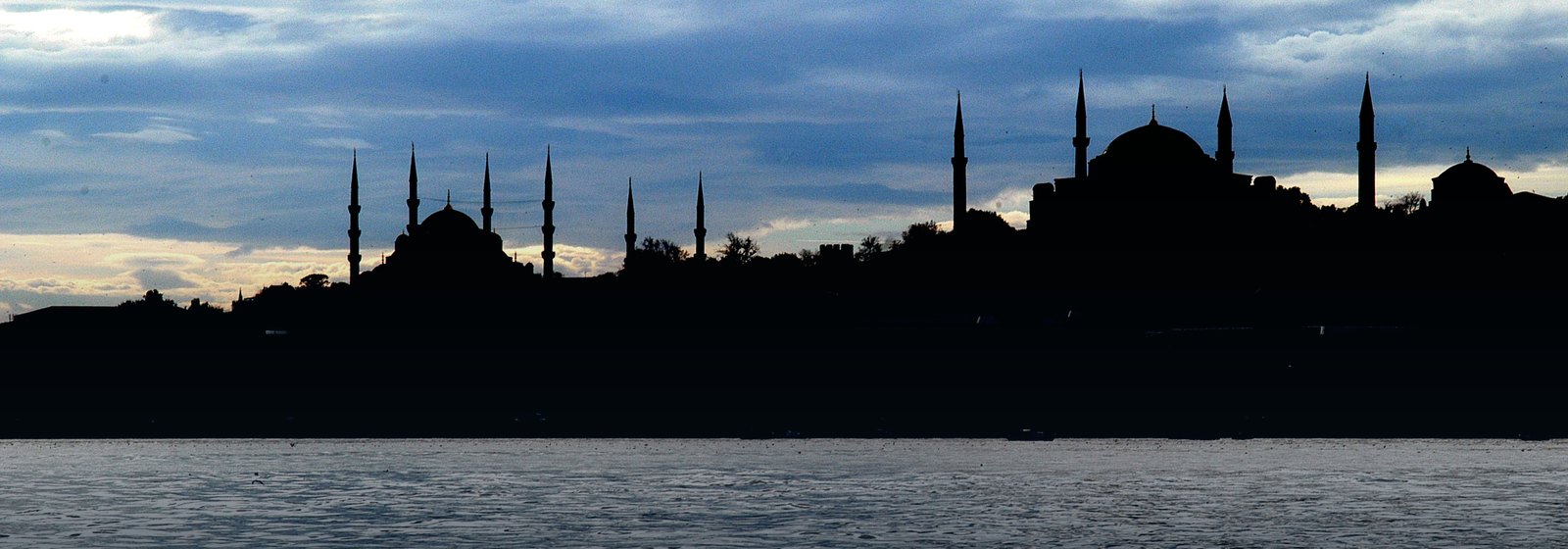
Istanbul on a Budget: All the Top Sights and How to Save
Istanbul is a city that can swallow your budget and just as easily save it: a ticket to Hagia Sophia costs as much as dinner for two, while a Bosphorus ferry costs less than a cup of coffee.
You get two continents, three empires and 3,000 years of history here: the mosques of Sultanahmet, Byzantine cisterns, a sultans' palace, the bazaars, Galata, Balat and the Asian side, where tourists rarely go — and they're missing out.
The secret of budget Istanbul is the Istanbulkart, lunch in a lokanta instead of a restaurant, the ferry instead of a tourist cruise, and the right free hours at museums. A day costs €40–55 including your bed.
Istanbul is a city that can swallow your budget and just as easily save it: a ticket to Hagia Sophia costs as much as dinner for two, while a Bosphorus ferry costs less than a cup of coffee.
What to see: the main sights
Hagia Sophia (Ayasofya)
Justinian's cathedral, later a mosque, then a museum and a mosque again: a 31-metre dome that has stood unsupported for 1,500 years, mosaics of Christ and emperors, giant medallions bearing the names of prophets, and columns brought from the Temple of Artemis.
Tickets: entry is paid for foreign visitors (approximate €25) — check ayasofyacamii.gov.tr · 1–1.5 hours
Money-saving tip: Entry is free for worshippers and paid for tourists, and the morning queue is enormous. Come at opening or an hour before closing. The upper galleries with the mosaics may be closed — check on the spot.
Blue Mosque (Sultanahmet)
A mosque from 1616 with six minarets and 20,000 handmade tiles inside: blue tulips, carnations and climbing vines. Light comes through 260 windows, and the domes are covered by an elaborate system of half-domes.
Tickets: free (a working mosque) · 40–60 minutes
Money-saving tip: Entry is free, but it closes for prayer five times a day — come between prayers. Women need a scarf and a skirt, everyone needs covered shoulders and knees: bring your own scarf, though free ones are handed out at the entrance.
Topkapı Palace
Home of the Ottoman sultans for 400 years: four courtyards, the Fountain of Ahmed III, the pavilion of relics (the Prophet's cloak and sword), a treasury with a throne and an 86-carat diamond, a harem with golden grilles and Bosphorus views from the Baghdad Pavilion.
Tickets: tickets by zone (approximate €25–30 for the main one, harem extra) — check muze.gov.tr · 2.5–3 hours
Money-saving tip: The harem is a separate ticket and the most interesting part if you care about people rather than stones. Take the Museum Pass if you're planning 3+ museums: it beats buying tickets separately. Closed on Mondays.
Basilica Cistern
A 6th-century underground reservoir: 336 columns rising out of black water, light thrown on them, fish in the dark and two Medusa heads serving as column bases. The atmosphere is that of an underground temple.
Tickets: ticket (approximate €20–25) — check yerebatan.com · 40–60 minutes
Money-saving tip: Go right at opening: the halls are narrow and groups arrive by 1 p.m. Buy your ticket online — the queue on the street is long. Evening sessions are shorter but the lighting is more dramatic.
Grand Bazaar (Kapalıçarşı)
One of the largest covered markets in the world: 60 streets, 4,000 shops, jewellers, carpets, ceramics, spices, tea and coffee. The 16th-century vaults are painted with patterns, and beneath them haggling has been going on for five centuries.
Tickets: free · 1.5–2 hours
Money-saving tip: Always bargain: the opening price is usually 2–3 times the real one. Buy tea and spices at the Egyptian Bazaar or from shops outside the market — they're cheaper there. Closed on Sundays.
Egyptian Bazaar (Mısır Çarşısı)
The spice bazaar by the Galata Bridge: mountains of dried herbs, spices, Turkish delight, coffee, nuts and tea. You'll also find caviar and expensive cheeses here, all under the smell of cinnamon and saffron.
Tickets: free · 40 minutes
Money-saving tip: Prices are noticeably lower than at the Grand Bazaar and the quality is the same. Buy coffee by weight at the stalls with grinders: freshly ground is cheaper than packaged and tastes better.
Galata Tower and Galata Bridge
A tower from 1348 above the Bosphorus: from the top gallery you see all of Istanbul — Sultanahmet, Topkapı, the Asian side and the Golden Horn. Below it, the two-level Galata Bridge: trams and strollers on top, restaurants underneath, and fishermen along its sides.
Tickets: the climb up the tower is paid (approximate €25–30), the bridge is free · 1–1.5 hours
Money-saving tip: The climb isn't cheap and comes with a queue — decide if it's worth it for you. The free alternative: the terrace by the Süleymaniye Mosque or Çamlıca Park. In the evening the fishermen on the bridge are a photo spot — a free attraction in themselves.
İstiklal Avenue and Taksim
Beyoğlu's 1.4 km pedestrian street: a historic tram, consulates, churches, synagogues, arcades, bookshops, cafés and music stores. It starts at Taksim Square with the Republic Monument and ends at Galata Tower.
Tickets: free · 1.5–2 hours
Money-saving tip: The tram is iconic, but a ticket costs as much as a ride across town; walking is more interesting. Food: duck into the side streets of Beyoğlu — lokantas there serve soup and kebab for a third of İstiklal prices.
Dolmabahçe Palace
The palace of the last sultans on the Bosphorus shore: 285 rooms, a crystal staircase, a 4.5-tonne chandelier, hand-made carpets and the hall where the republic was signed into being. A mix of baroque, rococo and Ottoman taste.
Tickets: ticket (approximate €20–25, more with the harem) — check millisaraylar.gov.tr · 1.5–2 hours
Money-saving tip: Entry is only with a scheduled guided tour at set hours — check in advance so you don't travel there for nothing. Photography inside is banned, but the gardens and the Bosphorus view are free.
Süleymaniye Mosque
Architect Sinan's work for Sultan Süleyman: a huge dome, four minarets, perfect acoustics, stained glass and the loveliest vantage point over the Golden Horn. Inside are the tombs of the sultan and his wife Hürrem.
Tickets: free · 40 minutes
Money-saving tip: Entry is free. The courtyard is one of the city's best free viewpoints: from here you see Galata Tower and the bridge. Come at sunset.
Bosphorus ferry ride
The most honest way to see the city: the ferry runs between Europe and Asia, past Dolmabahçe, the palaces, Rumeli Hisarı fortress, wooden yalıs and seagulls catching simit mid-air.
Tickets: a regular ferry on the Istanbulkart (cheap), tourist cruises cost more · 1.5–2 hours
Money-saving tip: Skip the €20–30 tourist cruise: a city ferry (Eminönü–Kadıköy, for example, or the line to Anadolu Kavağı) gives you the same view for the price of a metro ride. A simit and tea are your travelling companions.
Princes' Islands (Adalar)
An archipelago in the Sea of Marmara with no cars: pine-lined streets, wooden villas, monasteries on the hills, horses, bicycles and air without exhaust fumes. Büyükada is the largest; Heybeliada is quieter and cheaper.
Tickets: ferry on the Istanbulkart, bike or horse carriage extra · half a day
Money-saving tip: Go on a weekday and go early: ferries are packed at weekends. An e-bike beats a horse carriage on price and speed, and the climb to the Monastery of St George gives you a free panorama of the islands.
Kadıköy and the Asian side
The real Istanbul without tourists: Kadıköy market, the fish market, coffee shops, street art, Fenerbahçe park, a waterfront looking over the historic peninsula and the best breakfasts in the city.
Tickets: free · 2–3 hours
Money-saving tip: Food here is 30–40% cheaper than Sultanahmet and better: a kahvaltı (breakfast) of ten dishes for €8–12. The ferry from Eminönü takes 20 minutes and gives you the best view of the city from the water.
Balat and Fener
The old Greek and Jewish quarters on the Golden Horn: colourful houses, stepped streets, the Greek school with its red façade, the Church of St George — centre of the Orthodox world — and the Ahrida Synagogue.
Tickets: free · 1.5–2 hours
Money-saving tip: Morning is the best time: locals hang out laundry, kids play, and the neighbourhood feels alive rather than staged. Coffee in a side street costs half what it does on İstiklal.
Walls of Theodosius and Yedikule Fortress
The land walls of 413 that held out for a thousand years: 7 km of fortifications, moats, towers, the Golden Gate and Yedikule Fortress. One of the city's most underrated monuments.
Tickets: free (going inside the fortress needs a ticket) · 1–1.5 hours
Money-saving tip: Walking the walls is free and almost deserted. Go from Topkapı metro station towards Yedikule: the area is plain but safe by day, and the impression is stronger than many museums leave.
Miniatürk and Çamlıca Park
Miniatürk is a model park: Hagia Sophia, mosques, palaces and the Bosphorus Bridge at 1:25 scale, all walkable in an hour. Çamlıca is a huge hilltop park with Turkey's largest mosque and a panorama of the whole city and the straits.
Tickets: Miniatürk needs a ticket (approximate €12–15), Çamlıca is free · 2–3 hours
Money-saving tip: Miniatürk works well with kids and on rainy days. Çamlıca is the free alternative to Galata Tower: the view is even wider and the ride up costs pennies on the Istanbulkart.
Ortaköy and the Ortaköy Mosque
A neighbourhood under the Bosphorus Bridge: a mosque right on the water with a neo-Gothic façade, a waterfront full of tea houses, a market and the best view of the bridge, which is lit up in the evening. There's an antiques street here too.
Tickets: free · 1–1.5 hours
Money-saving tip: Breakfast on the waterfront is far cheaper and prettier than in the centre. In the evening the bridge is lit and the view from the shore is a postcard — no ticket required.
Free and off the beaten path
- Süleymaniye Mosque and its courtyard — Free entry, and the view over the Golden Horn and Galata is one of the best in the city. Come at sunset.
- Çamlıca Park — A hill on the Asian side with a Bosphorus panorama and a mosque. Free, and locals come here for picnics.
- A walk through Balat and Fener — Colourful houses, old churches and the Golden Horn waterfront. In the morning you see the neighbourhood's real life.
- Walls of Theodosius — Seven kilometres of ancient fortifications you can walk along. There are almost no tourists.
- Ortaköy waterfront and the Bosphorus Bridge — A mosque by the water, tea houses and the bridge lit up in the evening. Breakfast here costs half of what it does downtown.
3-day itinerary
Day 1
The historic peninsula. Morning: the Blue Mosque, then Hagia Sophia on an early ticket and the Basilica Cistern. Lunch in a lokanta near Sultanahmet. Afternoon: Topkapı with the harem and Gülhane Park. Evening: the Grand Bazaar or the Egyptian Bazaar, dinner by the Galata Bridge. All on foot.
Day 2
Beyoğlu and the strait. Morning: ferry from Eminönü to Kadıköy, breakfast on the Asian side and the Kadıköy market. Midday back and uphill: Galata Tower, İstiklal Avenue, Taksim. Evening: the Galata Bridge with its fishermen, dinner in the side streets of Beyoğlu. Transport: the T1 tram and ferries on the Istanbulkart.
Day 3
Palace, walls and views. Morning: Dolmabahçe on its schedule, then Ortaköy with its mosque and breakfast by the water. Afternoon: Süleymaniye and a walk along the Walls of Theodosius, or the Princes' Islands if you want sea and pine trees. Evening: Çamlıca Park at sunset — a free panorama of the city.
Getting there
Routes to Istanbul are some of the most competitive, so fares stay low in any season. Check both airports: Sabiha Gökçen (SAW) is often cheaper than the main one (IST).
Food
- Balık ekmek (fish sandwich) by the Galata Bridge — a classic for a couple of euros
- Simit (sesame ring) — breakfast for pennies, sold on every corner
- Tea houses — far cheaper than tourist cafés
Transport
Get an Istanbulkart: one card for the metro, trams, funiculars and ferries. A Bosphorus ferry is effectively a sightseeing cruise for about €1.
Where to stay
Budget-friendly and convenient: Kadıköy (Asian side) and Fatih. Compare prices on an aggregator — the spread across booking sites reaches 30%.
FAQ
How much does a day in Istanbul cost?
€40–55: a bed for €25–30, food €10–15 in a lokanta, transport €3–4 on the Istanbulkart, coffee and simit €2. Mosques, parks and walks are free.
What is the Istanbulkart and do I need one?
A single transport card for the metro, tram, bus, ferries and funicular. One ride on the card costs less than a single ticket, the card pays for itself in a day and can be shared by several people.
Is Hagia Sophia free?
Entry is free for worshippers and paid for foreign visitors. The morning queue is long, so come at opening or just before closing.
Is the Museum Pass worth it?
Yes, if you're planning three museums or more: the single pass usually costs less than separate tickets, especially with Topkapı and Dolmabahçe included.
What's the cheapest way to see the Bosphorus?
Take a city ferry on the Istanbulkart instead of a tourist cruise — same view, metro-ride price. The best lines are Eminönü–Kadıköy and the run up to Anadolu Kavağı.
What's free in Istanbul?
The Blue Mosque, Süleymaniye, Çamlıca Park, the Grand Bazaar and the Egyptian Bazaar, Balat, the Walls of Theodosius, and the Ortaköy and Kadıköy waterfronts.
When should I go to Istanbul?
April–May and September–October: warm, not scorching, and fewer tourists. November–March is cheaper for accommodation but can be rainy.
Is Istanbul safe?
Yes, with the usual precautions: watch yourself in the crowds on İstiklal and in the bazaars, only take official taxis or use an app, and bargain in the markets.