
Barcelona on a Budget: Every Top Sight and How to Pay Less
Barcelona can be expensive and almost free at the same time: a menú del día for €13 versus dinner for €35, free beaches versus paid viewpoints, city markets versus restaurants on La Rambla.
Here you get nine Gaudí buildings on the UNESCO list, two districts fighting over the title of most beautiful in Europe, the sea inside the city limits and mountains right above it. We've gathered every main sight, honest ticket prices and the tricks that actually save money — so you see the most and don't go broke.
The golden rule: book online in advance, visit museums during their free hours, eat at lunchtime rather than in the evening. Then a day in Barcelona costs €45–60 including your bed.
Barcelona can be expensive and almost free at the same time: a menú del día for €13 versus dinner for €35, free beaches versus paid viewpoints, city markets versus restaurants on La Rambla.
What to see: the main sights
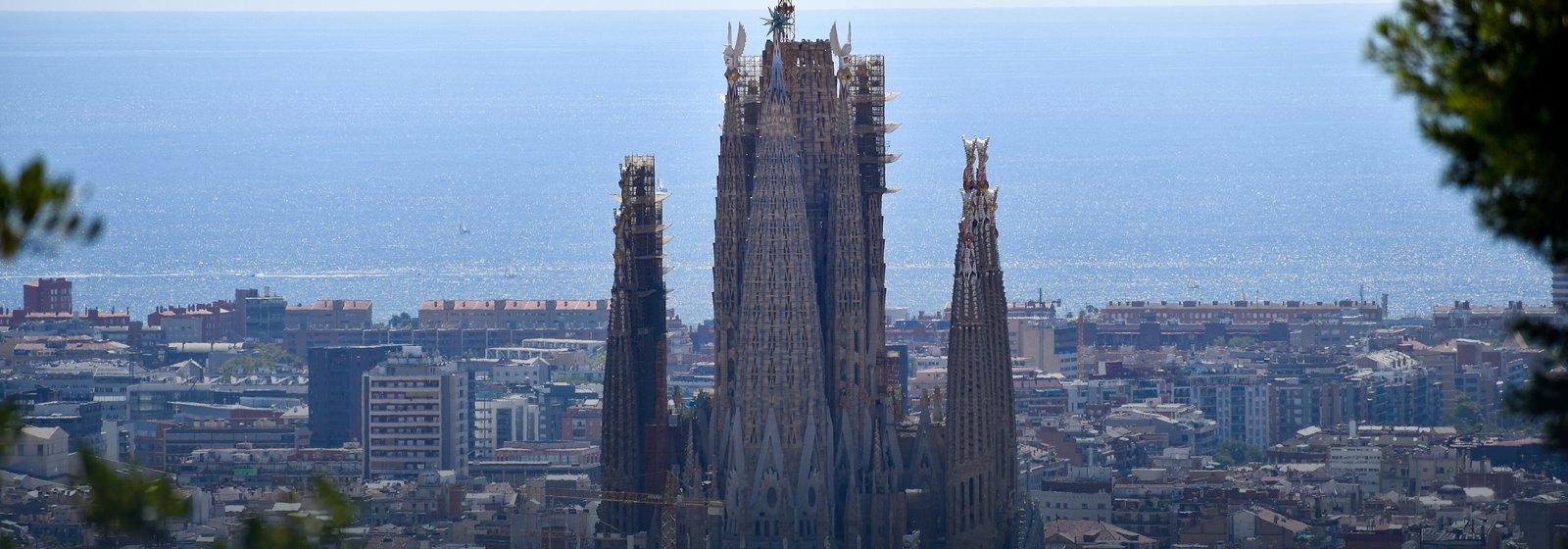
Sagrada Família
The planet's most famous unfinished building and the city's symbol: Gaudí's basilica, under construction since 1882. Inside is a forest of columns and stained glass that sends orange and green patches drifting across the floor each morning. Outside are four façades, each with its own character: Nativity, Passion, Glory, and a new one still being completed.
Tickets: approximate ≈€26 for a basic ticket, more with a tower — check sagradafamilia.org · 1.5–2 hours
Money-saving tip: Tickets online only, booked in advance — they don't sell them on the spot. Take the first morning slot (9:00–10:00): cheaper and no queues. Towers cost extra and are worth it, but the climb up a narrow spiral staircase isn't for anyone afraid of heights.
Park Güell
A fairy-tale park above the city: the mosaic serpent bench, the Hall of a Hundred Columns, the gingerbread house by the entrance and the famous lizard. The Monumental Zone needs a ticket, but 90% of the park is ordinary public ground with free entry — and that's where you get the classic view over Barcelona and the sea.
Tickets: the Gaudí zone is ticketed (approximate €10–18), the rest of the park is free — check parkguell.barcelona · 2–3 hours
Money-saving tip: Go at opening time (8:00–9:30) or an hour before closing — better light, fewer people. On a tight budget, climb into the free part of the park and on to the Carmel bunkers: the view is the same and you don't need a ticket.
Casa Batlló
A house Gaudí reworked for a textile magnate: a façade of bones and scales, a salon of curved wood, a light well tiled from dark blue to white, and a dragon's back of a roof. Inside there are immersive projections, not just furniture.
Tickets: approximate ≈€29–35 — check casabatllo.es · 1–1.5 hours
Money-saving tip: The augmented-reality ticket costs more, but without it you won't get the idea. If you'd rather not spend it, the façade and lobby are perfectly visible from Passeig de Gràcia — and that's already half the impression.
Casa Milà (La Pedrera)
Gaudí's last residential project: a rippling stone façade with hardly a straight line, seaweed-like wrought-iron balconies and a rooftop guarded by chimney warriors. The attic holds a Gaudí museum with models explaining his engineering ideas.
Tickets: approximate ≈€28 — check lapedrera.com · 1–1.5 hours
Money-saving tip: The rooftop stays open until sunset — the evening slot has the best light. Sundays sometimes bring discounts and free hours for residents, but those need registration: check the website.
Passeig de Gràcia
The city's grand architectural boulevard: within one kilometre you get Casa Batlló, Casa Milà, Casa Amatller, Casa de les Punxes and Palau Lleó Morera. It's an open-air museum, free, with wide pavements and Gaudí's mosaic paving.
Tickets: free · 40–60 minutes
Money-saving tip: The evening lighting comes on after sunset — the façades look better than by day. Drink your coffee in the side streets off the boulevard: prices right on Passeig de Gràcia are 40% higher.
Gothic Quarter (Barri Gòtic)
A medieval labyrinth: Roman walls, the Jewish quarter of El Call, Plaça del Rei, the Bishop's Bridge and Santa Eulàlia Cathedral. This is also where Plaça del Rei, seat of the Inquisition, sits, along with the remains of the Temple of Augustus built into an apartment block.
Tickets: free · 2–3 hours
Money-saving tip: Before 10:00 the streets are empty — you get photos without the crowds. Walk through open gates into the courtyards: many inner patios are free to enter and feel like a separate world.
Barcelona Cathedral
The Cathedral of the Holy Cross and Saint Eulalia: 14th-century Gothic, a cloister with thirteen white geese, and a crypt holding the relics of the city's patron saint. From the roof you see the whole Gothic Quarter.
Tickets: entry to the cathedral is paid, with free hours for prayer — check catedralbcn.org · 40 minutes
Money-saving tip: The free hours for prayer entry are usually morning and evening — check the cathedral's website. The roof is a separate ticket, but the view is worth €3–5.
La Rambla
The city's most famous boulevard: plane trees, living statues, flower stalls, the Liceu opera house and a Miró mosaic halfway along. It ends at the sea on Plaça Portal de la Pau, by the Columbus column.
Tickets: free · 40 minutes
Money-saving tip: This is a place to walk, not to eat: prices here are 2–3 times higher. Step two blocks towards El Raval — the same paella costs half as much.
La Boqueria Market
One of Europe's most famous markets: meat counters, jamón, fruit juices, fish, oysters and a gallery where tourists photograph mountains of sweets. The real market is deeper in, around the meat and fish stalls.
Tickets: free · 30–45 minutes
Money-saving tip: Juices deep inside the market cost €1.5 against €4 at the entrance. Go at 8:00–9:00: it's working for locals, there are no queues and everything is cheaper.
Montjuïc and its castle
The hill above the port: Montjuïc Castle with a panorama of the whole city, the Olympic Stadium, the Olympic Gallery, the botanical garden, the Miró Foundation and the magic fountain at its foot. Escalators and cable cars link it all together.
Tickets: the cable car up is paid, the castle needs a ticket — check ahead · 2–3 hours
Money-saving tip: The viewpoints by the castle are free — you only pay to go inside. The Telefèric de Montjuïc is a treat, but bus 150 climbs to the castle on a regular T-casual ticket.
Bunkers del Carmel
Civil War concrete bunkers on Turó de la Rovira hill — the city's best free viewpoint. From here you see the Sagrada Família, the sea, Tibidabo and the whole grid of the Eixample.
Tickets: free · 40–60 minutes
Money-saving tip: Come an hour before sunset: this is where locals watch the sun go down with a blanket and a bottle of wine. Get up on foot via the stairs from El Carmel metro, or take bus 119.
Parc de la Ciutadella and the Arc de Triomf
The main park in the centre: a monumental fountain, a lake with rowing boats, a mammoth, a greenhouse, the Catalan parliament and the zoo next door. Beside it stands the red-brick Arc de Triomf, with the park entrance on Passeig de Sant Joan.
Tickets: free · 1–1.5 hours
Money-saving tip: A boat on the lake is €6 for 30 minutes — nicer and cheaper than coffee on La Rambla. On Sundays street musicians play in the park: a free concert.
Barceloneta and the beaches
A city beach 15 minutes' walk from the Gothic Quarter: 4.2 km of sand from Barceloneta to Mar Bella, a promenade, wooden decks, volleyball courts, kitesurfing and bikes. Behind it lies a former fishing neighbourhood full of tapas bars.
Tickets: free · 2–4 hours
Money-saving tip: A sun lounger with a parasol costs €10–15, but your own towel is free. Food: take a menú del día in the back streets of Barceloneta for €13 instead of €25 on the seafront.
Tibidabo
The mountain above the city, crowned by the Temple of the Sacred Heart, with Spain's oldest amusement park (running since 1901), a vintage plane ride and a Ferris wheel looking out over the whole city and the sea.
Tickets: the amusement park needs a ticket (approximate €35); the temple and viewpoints are free · half a day
Money-saving tip: The temple and the terrace around it are free — the Funicular de Tibidabo takes you up. The park isn't open every day: check the calendar at tibidabo.cat; in low season it opens at weekends.
Montserrat
A mountain of strange rock formations with a Benedictine monastery 50 km from the city: the Black Madonna, a boys' choir (singing at set hours) and viewpoints over the rocky ridges. One of the most powerful places in Catalonia.
Tickets: transport and the rack railway or cable car are paid (approximate €25–40 for the trip); entry to the basilica is free · half a day or a full day
Money-saving tip: The cheapest route is the FGC train from Plaça Espanya to Montserrat plus the rack railway or cable car (the Trans Montserrat combined ticket). Arrive by 9:00, before the tour buses.
Museums: MNAC, Picasso, Miró
MNAC holds Romanesque frescoes and Catalan art in a palace on Montjuïc; the Picasso Museum spans five medieval palaces and 4,000 works; the Miró Foundation shows bright paintings and sculpture on Montjuïc.
Tickets: approximate €12–13 each, with free hours · 1.5–2 hours each
Money-saving tip: Free hours: MNAC from 15:00 on Saturdays and on the first Sunday of the month; Picasso from 15:00 on Sundays and on the first Thursdays. Book the free slots online — they go fast.
Santa Maria del Mar
A 14th-century church in the Born district, built by the townspeople themselves: slender columns, a vast nave and an inner courtyard of Gothic arches. One of the purest examples of Catalan Gothic.
Tickets: entry by ticket (approximate €10), with free hours · 30–40 minutes
Money-saving tip: Entry is free at certain times for prayer — check the parish website. Nearby are the Born Centre de Cultura and the Born market: a cultural centre inside an old iron market hall, free to enter the main space.
Camp Nou and Barcelona football
FC Barcelona's home ground, one of the biggest in Europe, hosting matches again after its rebuild. The club museum holds the Champions League trophy, historic balls and a hall of silverware.
Tickets: the stadium tour needs a ticket (approximate €28–35); match tickets cost more · 1.5–2 hours
Money-saving tip: The rebuild changed the tour routes — check schedules and available areas on fcbarcelona.com. The cheapest way to watch a match is on TV in a bar with locals: same atmosphere, €5 for a beer.
Free and off the beaten path
- Bunkers del Carmel viewpoint — The city's best free panorama. Come at sunset: you see the Sagrada Família, the port and Tibidabo all at once.
- Parc de la Ciutadella — A lake, a fountain, a mammoth and a greenhouse — free entry from morning until evening. On Sundays musicians play here for nothing.
- Barceloneta and Mar Bella beaches — 4.2 km of city sand, free showers and a promenade. Eat in the back streets — cheaper than the seafront.
- Passeig de Gràcia after dark — Gaudí's and Montaner's façades lit up, without a single ticket. Just walk the boulevard after sunset.
- Gràcia, El Born and Sant Antoni — Local Barcelona without tourist prices: squares full of kids, markets, bikes and tapas for €2–3.
3-day itinerary
Day 1
Old town and the sea. Morning: the Gothic Quarter, Barcelona Cathedral, Plaça del Rei, El Call. Midday: La Boqueria and a walk down La Rambla to the Columbus column, lunch with a menú del día in El Raval. Evening: Barceloneta — beach, promenade and sunset. All on foot, no transport needed.
Day 2
Gaudí and the Eixample. Morning: Sagrada Família on an early online ticket, then Passeig de Gràcia (Casa Batlló and Casa Milà from outside, inside if you still have the energy and budget). Lunch in Gràcia. Afternoon: Park Güell on a ticket; in the evening the free part of the park and Bunkers del Carmel for sunset. Metro L2/L3.
Day 3
Montjuïc and the upper city. Morning: Montjuïc — castle, Olympic Stadium, Miró Foundation, gardens. Lunch near Plaça Espanya. Afternoon, your pick: Tibidabo with its temple and views (if the park is open) or a half-day trip to Montserrat on the FGC combined ticket. Evening: the free Parc de la Ciutadella or wine in Sant Antoni.
Getting there
The main airport is El Prat (BCN) — the Aerobus and train run into the city. Low-cost carriers like Ryanair land at Girona (GRO) — a direct bus runs from there to Barcelona (~1 h 15 min); count the fare together with the transfer.
Food
- Menú del día — a set lunch of 2–3 courses with a drink for €12–15; look for it in working neighbourhoods
- Tapas bars in Gràcia and El Born — cheaper than on the Rambla
- Santa Caterina market — like La Boqueria but local and cheaper
Transport
Buy a 10-ride T-casual card — better value than single tickets, valid on metro, buses and trams. The centre (the Gothic Quarter, El Born, the Rambla) is compact — you'll walk a lot of it. Night buses replace taxis after the metro closes.
Where to stay
Budget and non-touristy: Gràcia, Poble-sec and Sants. Compare prices with an aggregator and take free cancellation — Barcelona prices jump around events and trade fairs.
FAQ
How much does a day in Barcelona cost?
€45–60 per person: a bed for €25–30, food €12–15 with a menú del día, transport €1.5–2, coffee and tapas €5. The beaches, the Gothic Quarter, Bunkers del Carmel and Passeig de Gràcia are free.
Do I need to buy Sagrada Família tickets in advance?
Yes — online only, usually several days ahead. They don't sell tickets on site. Morning slots are cheaper and queue-free.
What is a menú del día?
A set lunch of two or three courses with a drink for €12–15, served from 13:00 to 16:00 on weekdays. The same dishes cost twice as much in the evening.
How do I save on transport?
The T-casual card gives 10 rides (metro, bus, tram) for about €12 and can be shared between two people. From the airport, take the Aerobús or the R2 train — taxis are expensive.
What's free in Barcelona?
The Gothic Quarter, La Rambla, La Boqueria market, the beaches, Parc de la Ciutadella, Bunkers del Carmel, the Tibidabo temple, Passeig de Gràcia and the Montjuïc viewpoints.
When is museum entry free?
MNAC from 15:00 on Saturdays and on the first Sundays of the month; the Picasso Museum from 15:00 on Sundays and on the first Thursdays. The slots are free but get booked up in advance.
How many days do you need in Barcelona?
At least three: old town and the sea, Gaudí and the Eixample, Montjuïc with Tibidabo or Montserrat. In two days you'll see the highlights, but at a run.
When is the cheapest time to go?
November to March: hotels are 30–40% cheaper, there are almost no queues, and it's cool but sunny for walking. July and August are expensive and hot.